- 4 Accessible Experiences to Connect with Traditional Japanese Culture
- ① Watching sumo wrestling from a wheelchair accessible seat.
- ② An authentic tea ceremony experience enjoyed in a seated setting.
- ③ Calligraphy experience at a table
- ④ Kimono dressing experience and commemorative photo shoot (while seated)
- Enjoy Japan's magnificent nature! Accessible outdoor activities
- Dual skiing (chair skiing) where you ski while sitting in a special chair.
- Tandem paragliding with an instructor
- Fully supported accessible diving
- A special trip just for you! Accessible 1-day private tours in various locations.
- Tokyo: A tour of a city where cutting-edge technology and history merge.
- Kyoto and Nara: World Heritage Tours to Experience the Charm of Ancient Capitals
- Hokkaido: A tour to enjoy magnificent nature and gourmet food.
- Okinawa: Resort tours where you can experience beautiful seas and unique culture
- Accessible transportation options and points within Japan
- Barrier-free services and reservation methods for Shinkansen and other trains
- Use a private, safe welfare taxi or care taxi.
- Accessibility and support systems at major airports
- For accessible tours, trust Flat Travel.
- Frequently Asked Questions about Accessible Activities in Japan
- By when do I need to make a reservation for the activity?
- Are caregivers or special support available?
- How can I find out more about the barrier-free facilities?
- Is it possible to accommodate allergies and dietary restrictions when dining in Japan?
- Summary: Unforgettable and accessible memories in Japan
Travel in Japan should be enjoyable for everyone. This article, written by a barrier-free travel expert, provides detailed information on accessible activities and travel tips that can be safely enjoyed by people with disabilities, the elderly, and their families. From traditional cultural experiences to outdoor activities in nature and convenient transportation, we offer comprehensive information to make your trip to Japan unforgettable. Prepare thoroughly beforehand and plan your own special journey.
4 Accessible Experiences to Connect with Traditional Japanese Culture
Japan's rich culture captivates all who visit. You don't have to give up on experiencing traditional culture just because you have difficulty sitting in the seiza position or standing for long periods. Here, we've carefully selected four accessible cultural experiences that are comfortable for wheelchair users and those with physical limitations. Let's look at each experience and its specific features to ensure accessibility.
① Watching sumo wrestling from a wheelchair accessible seat.

Sumo, Japan's national sport, attracts many people with its power and traditional beauty. Major sumo venues, including the Ryogoku Kokugikan in Tokyo, have dedicated viewing spaces for wheelchair users. These seats are located in areas that offer a clear view of the sumo ring and allow for comfortable viewing in a spacious environment. Tickets for these seats are generally purchased separately from general sales, so it is recommended to check the reservation method in advance on the Japan Sumo Association website or elsewhere. Multipurpose restrooms are also available inside the venues, so you can enjoy the event with peace of mind.
② An authentic tea ceremony experience enjoyed in a seated setting.

The tea ceremony, where one enjoys a cup of tea in silence, is a profound cultural practice that allows one to experience the Japanese aesthetic of "wabi-sabi." While traditional tea rooms are based on tatami mats and kneeling, in recent years, an increasing number of facilities are offering "ryurei-shiki" (standing style) tea ceremony experiences, where the tea is performed using tables and chairs. This allows people who have difficulty kneeling or who use wheelchairs to learn authentic tea ceremony etiquette without putting strain on their knees or backs. There are also facilities with accessible tea rooms throughout the country, so why not take this opportunity to experience Japanese spiritual culture?
③ Calligraphy experience at a table

Calligraphy, a practice that involves calming the mind and carefully moving the brush, is a popular cultural experience in Japan. While you might imagine writing while sitting on the floor, many calligraphy studios and workshops provide tables and chairs. Even those using wheelchairs can concentrate on calligraphy in a comfortable posture, with tables adjusted to their preferred height. In most cases, all necessary tools are available for rent, making it appealing to participate without bringing anything. Instructors provide careful guidance tailored to each individual's level, so even beginners can confidently try their hand at creating their own unique works of art.
④ Kimono dressing experience and commemorative photo shoot (while seated)
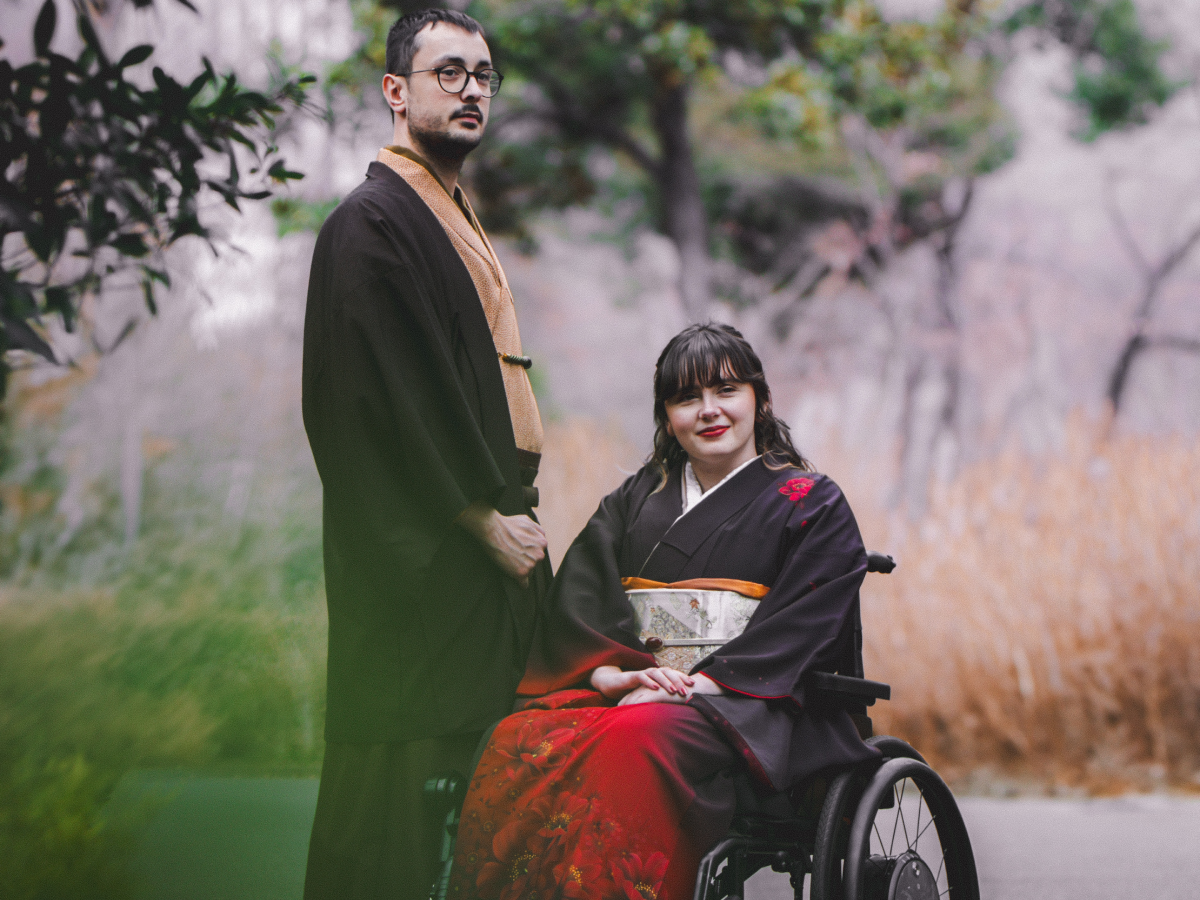
Many people dream of wearing a beautiful kimono or yukata. Even those who have given up on the idea of wearing a kimono due to physical limitations can easily experience traditional Japanese clothing by using a service that allows you to be dressed while seated. Experienced dressers will carefully and efficiently dress you in a way that does not strain your body. The kimono is designed to stay in place even when seated in a wheelchair, and you can enjoy taking commemorative photos in your beautiful kimono against the backdrop of Asakusa or Kyoto. It is perfect for creating memories of a special day.
Enjoy Japan's magnificent nature! Accessible outdoor activities
Japan's appeal lies not only in its history and culture, but also in its magnificent natural beauty that changes with the seasons. Here, we introduce accessible outdoor activities that anyone can safely enjoy with the support of professional instructors and special equipment. Why not get active in the crisp air and experience unforgettable moments?
Dual skiing (chair skiing) where you ski while sitting in a special chair.

If you're visiting Japan in winter, a powder snow skiing experience is a must. Dual skiing (chair skiing) is an activity where you ride a chair-shaped sled piloted by a specially trained pilot down the slopes. Since you don't need to operate the skis yourself, you can fully enjoy the spectacular snow-covered mountain scenery and the exhilarating feeling of cutting through the wind, regardless of your skiing experience or physical ability. Experience programs are offered at ski resorts in Nagano.
Tandem paragliding with an instructor
Tandem paragliding can fulfill your dream of flying like a bird. With an experienced instructor, you can enjoy an aerial stroll in a two-person paraglider, taking in magnificent scenery below. Staff provide full support during takeoff and landing, and some schools even offer specially designed flying chairs for people with disabilities. Prior consultation allows you to create a safe flight plan tailored to your individual circumstances.
Fully supported accessible diving
The experience of being surrounded by Okinawa's beautiful coral reefs and colorful fish is truly exceptional. Accessible diving is a program established by a diving instruction organization for people with disabilities, where instructors with specialized knowledge and skills provide near one-on-one support. The buoyancy of the water reduces the strain on the body, allowing even those whose movement is restricted on land to freely enjoy the underwater world. You can explore the ocean world with peace of mind in an environment where safety management is thoroughly implemented.
A special trip just for you! Accessible 1-day private tours in various locations.
Everyone has their own travel style. For those who want to create a trip that suits their interests and pace, rather than following a set itinerary, an accessible private tour is recommended. From arranging accessible vehicles to planning barrier-free sightseeing routes and selecting dining locations, our expert consultants will create a special day tailored just for you. Here are some examples of tours in popular areas.
Tokyo: A tour of a city where cutting-edge technology and history merge.
Tokyo, where cutting-edge technology and history dating back to the Edo period coexist, is full of attractions. For example, you could enjoy the spectacular view from the Tokyo Skytree observation deck, accessible by elevator, and then experience the atmosphere of old Tokyo in Asakusa, where Nakamise Street is easily accessible by wheelchair. By using a wheelchair-accessible vehicle for transportation and making reservations in advance for lunch at a wheelchair-friendly restaurant, you can enjoy a smooth and comfortable day.
Kyoto and Nara: World Heritage Tours to Experience the Charm of Ancient Capitals
Kyoto and Nara, Japan's ancient capitals, are dotted with numerous World Heritage Sites. While many of the historic temples and shrines have numerous stone steps and gravel paths, you can enjoy sightseeing with peace of mind if you are accompanied by a guide who is familiar with the routes with ramps and alternative paths. For example, you can spend time interacting with the deer in Nara Park, be moved by the grandeur of the Great Buddha Hall of Todai-ji Temple, and then travel to Kyoto in the afternoon to admire the brilliance of Kinkaku-ji Temple. It is possible to plan an efficient tour of famous sights while taking accessibility into consideration.
Hokkaido: A tour to enjoy magnificent nature and gourmet food.
Hokkaido, with its vast landscapes and rich food culture, is a truly captivating destination. A trip exploring its beautiful scenery in each season is a special experience. In summer, you can stroll through the lavender fields of Furano on an electric cart, and in winter, you can board an icebreaker to see drift ice up close, fully enjoying the dynamic natural beauty. In Hokkaido, where travel distances tend to be long, chartering a comfortable, accessible vehicle is highly recommended. We can also arrange for barrier-free restaurants where you can savor local delicacies such as fresh seafood and Jingisukan (grilled lamb).
Okinawa: Resort tours where you can experience beautiful seas and unique culture
Okinawa, with its beautiful emerald green seas, is the ultimate resort destination. It boasts numerous wheelchair-accessible attractions, including the awe-inspiring Churaumi Aquarium with its massive tanks, and Shuri Castle Park (partially restored area), where you can experience the history of the Ryukyu Kingdom. You can access the water's edge using special mats installed on the beach, or enjoy an underwater stroll on a barrier-free glass-bottom boat. Plan an accessible trip that allows you to fully immerse yourself in the resort atmosphere.
Accessible transportation options and points within Japan
Securing transportation is crucial for a comfortable trip in Japan. Fortunately, Japan's public transportation and related services are becoming increasingly accessible. This article explains useful transportation options within Japan and tips for using them smoothly. Gathering information and making reservations in advance is key to a stress-free trip.
Barrier-free services and reservation methods for Shinkansen and other trains
The Shinkansen, which connects cities across Japan at high speed, is an extremely convenient mode of transportation. Many trains have dedicated spaces for wheelchair users and larger multi-purpose rooms. To use these seats, reservations are required from one month prior to the travel date at the station's "Midori no Madoguchi" (ticket office) or through some online services. Also, station staff will arrange for ramps and other assistance when boarding and alighting, so informing them of your station and time in advance will make boarding and alighting much smoother. Many stations on conventional lines are also equipped with elevators and ramps.
Use a private, safe welfare taxi or care taxi.
For getting around between tourist spots or covering the "last mile" from the train station to your destination, welfare taxis and care taxis are incredibly useful. These vehicles are equipped with lifts and ramps, allowing passengers to board and alight while remaining in their wheelchairs. Drivers often hold qualifications related to assistance, ensuring a safe and reliable experience. As they are generally by reservation only, it's recommended to book early once you've decided on your desired date and time. Private charters are also available, making them ideal for exploring tourist destinations at your own pace, like a private tour.
A Complete Guide to Caregiving Taxis in Japan: From Booking Methods to Fares and Sightseeing Use
Accessibility and support systems at major airports
Major airports in Japan, such as Narita, Haneda, and Kansai International Airports, which serve as the country's gateways to the skies, boast a high level of accessibility by global standards. The airports are barrier-free, and spacious, multi-purpose restrooms are located throughout. Airlines offer a service where staff will escort passengers in wheelchairs from check-in to the boarding gate upon request. Furthermore, a free wheelchair rental service is available within the airport, providing peace of mind for those who are apprehensive about long-distance travel.
For accessible tours, trust Flat Travel.
For accessible tours, leave it to us. We're not just booking agents; we offer total travel planning services with the following three strengths.
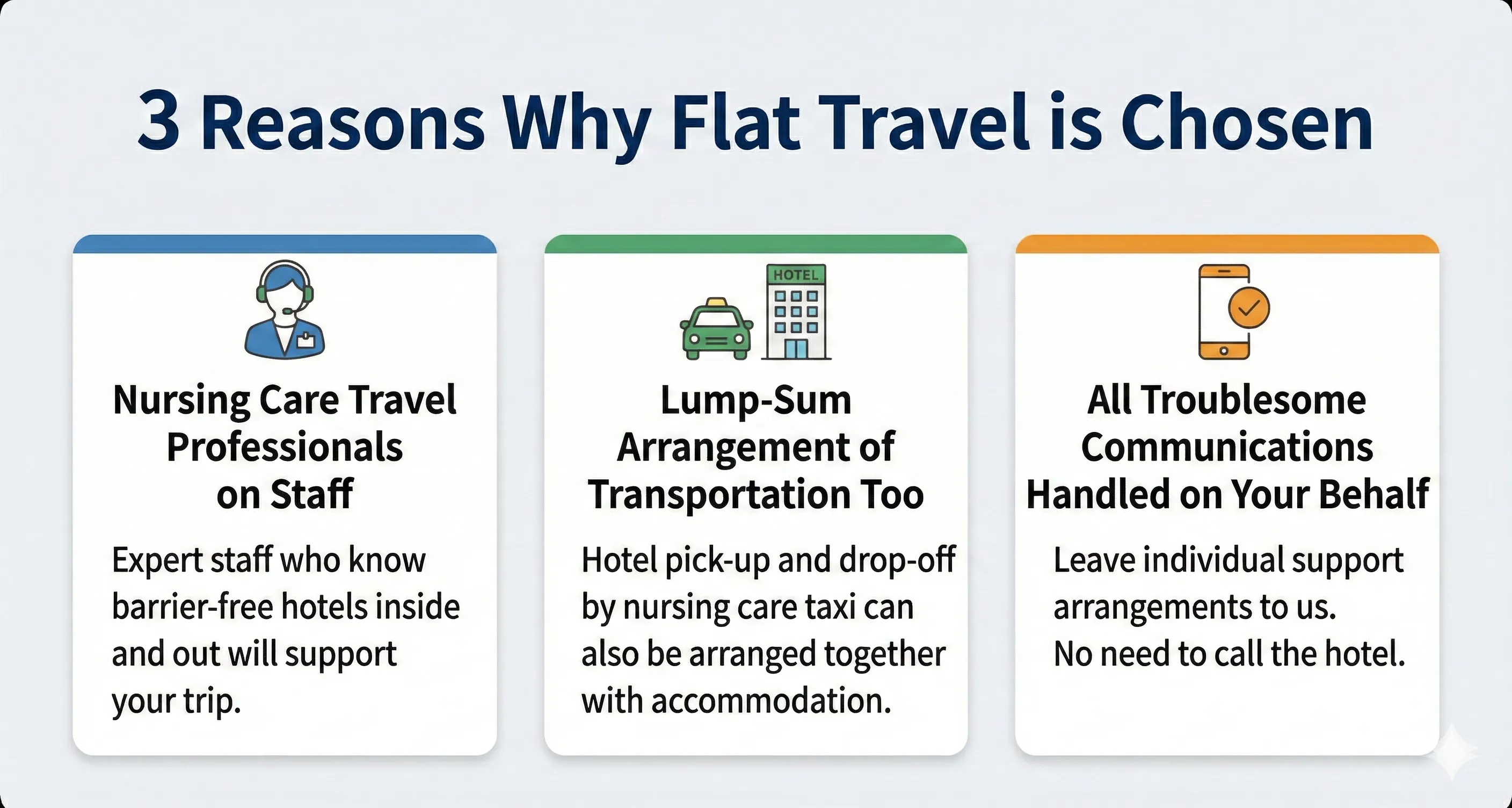
[Complete Safety Standards] 24-hour support through medical collaboration
The only one of its kind in Japan! In collaboration with Kawasaki Rinko General Hospital, we have established a system where doctors can respond to emergencies via online consultations 24 hours a day. We promise the highest level of peace of mind in the industry, with immediate responses to sudden changes in health or unforeseen circumstances.
[Incredibly Easy] No need for troublesome phone verification. Leave it all to the professionals.
"Even calling hotels is a struggle just to tell them the size of my wheelchair..." "Online information isn't enough; I'm worried about steps and uneven surfaces at the location..." You no longer need to tire yourself out with endless checking and explaining things over the phone. Barrier-free travel professionals will handle everything from checking door widths to ensuring smooth access at the location. We create a plan to prevent the problem of "getting there only to find I can't get in" and complete the booking all in one go.
[Uncompromising Quality] Bespoke by our skilled concierge
A dedicated planner will help you turn your dreams into reality. Instead of a standardized tour, we'll create a high-quality trip tailored to your specific needs and desires.
Safety, comfort, and unforgettable experiences—we'll guide you on a journey that fulfills all your desires.
[List of carefully selected tour examples and plans]
[Consult with a concierge via LINE (free)]
Frequently Asked Questions about Accessible Activities in Japan
Planning an accessible trip can raise many questions and concerns. Here, we've compiled frequently asked questions and their answers. Please use this as a reference when preparing for your trip.
By when do I need to make a reservation for the activity?
While it varies depending on the type of activity and whether special support is required, early booking is generally advisable. Especially for activities requiring specialized instructors or equipment, such as dual skiing or diving, we recommend contacting us at least a month in advance. For private tours or arrangements involving accessible vehicles, it's best to start planning as early as possible to secure your desired dates.
Are caregivers or special support available?
Yes, we can make the necessary arrangements. If you require assistance with transportation, sightseeing, or meals during your trip, we can arrange for a caregiver (helper) with specialized knowledge or an interpreter/guide for those who have language concerns. By discussing your support needs in advance, we can arrange the most suitable personnel for your requirements. If you consult with a travel agency specializing in barrier-free travel like ours, we can handle all of these arrangements for you.
How can I find out more about the barrier-free facilities?
While accessibility information for accommodations and tourist facilities is often available on each facility's official website, the information may be insufficient or difficult to understand due to the use of technical jargon. For more detailed information, such as the specific height of steps, the width of passageways, or the availability of shower chairs, it can be time-consuming to contact the facility directly. In such cases, please consult with experts like us at Flat Travel. You won't need to contact hotels directly; we will listen to your needs and provide comprehensive support, from suggesting the most suitable facilities to making reservations.
Is it possible to accommodate allergies and dietary restrictions when dining in Japan?
Many restaurants and hotels in Japan are increasingly accommodating food allergies and religious dietary restrictions (vegetarian, halal, etc.). However, to ensure that your request is fulfilled, it is essential to clearly communicate all details when making a reservation. Especially if you have severe allergies, it is important to confirm the ingredients and cooking utensils used. If you are using a private tour, the travel agency will act as an intermediary and coordinate with the restaurant, allowing you to enjoy your meal with greater peace of mind.
Summary: Unforgettable and accessible memories in Japan
Japan offers a wide variety of accessible activities and comprehensive support systems that allow everyone to share in the joy of travel. From quiet moments immersed in traditional culture to exhilarating experiences in nature, the options are endless. The important thing is to clarify your own desires and plan with a trusted expert. Use the information in this article as a guide to plan your own special trip to Japan and create wonderful memories that will last a lifetime.