- Wheelchair-accessible seats and on-board facilities on Japanese Shinkansen trains
- Types and locations of wheelchair-accessible seats (free space)
- How to use the multipurpose room safely and with a lock
- Barrier-free multi-function toilets
- [For Beginners] How to reserve a wheelchair seat on the Japanese Shinkansen
- Reservations at JR station "Midori no Madoguchi" (Green Window)
- How to make a reservation by phone
- Important points to note when making online reservations
- When can you make a reservation? You can make a reservation from one month before the date of travel.
- For barrier-free travel, leave it to Flat Travel
- What to do on the day of your Shinkansen journey in Japan | How to get on and off in a wheelchair
- Traveling from the ticket gate to the platform and advance notice
- Boarding support by station staff (installation of ramps)
- Things to note when getting off and transferring
- Tips for comfortable wheelchair travel on Japan's Shinkansen
- Seats for caregivers and companions
- Where to store large luggage and preparations
- Packing list for a worry-free trip
- Other barrier-free transportation options in Japan that you should consider, along with the Shinkansen
- Wheelchair access on conventional express trains
- Barrier-free access on limousine buses and express buses
- Using a welfare taxi (nursing care taxi)
- Learn more about barrier-free information in Japan!
- Frequently asked questions about wheelchair access on Japan's Shinkansen
- Can I ride in an electric wheelchair?
- Can I ride on the day without making a reservation?
- Are there any discounts for people with disabilities?
- Where can I check the barrier-free facilities within the station?
- For reservations for Japan's Shinkansen and barrier-free travel, contact Flat Travel
Japan's Shinkansen bullet trains are widely used as a fast and comfortable means of transportation connecting major cities across the country. Wheelchair users and those with mobility concerns can enjoy a safe and enjoyable trip by following the appropriate preparations and procedures. This article provides comprehensive information on the types of wheelchair-accessible seats on Shinkansen trains, onboard facilities, reservation procedures that are easy to understand even for first-time passengers, the process on the day of boarding, and tips for ensuring a comfortable journey. We hope this guide will alleviate your concerns and help you have a wonderful trip, from the planning stage to arriving at your destination.
Wheelchair-accessible seats and on-board facilities on Japanese Shinkansen trains
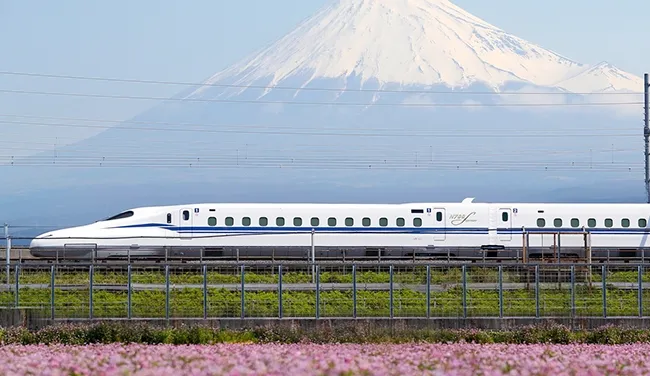
Japan's Shinkansen trains are equipped with a variety of barrier-free facilities to ensure a comfortable journey for wheelchair users. Typical examples include dedicated seating areas, multipurpose rooms, and spacious multi-function toilets. These facilities are designed to reduce the physical strain on passengers even during long journeys, allowing them to enjoy their trip with peace of mind. Here we will introduce in detail the facilities available on Shinkansen trains.
Types and locations of wheelchair-accessible seats (free space)

Wheelchair-accessible seats on Shinkansen trains are generally "free space" type seats, where the regular seats have been removed and the train can be used while in a wheelchair. The car number where this space is located varies depending on the train model, such as car 11 on the Tokaido/Sanyo Shinkansen (N700 series, etc.) and car 5 on the Tohoku Shinkansen (E5 series, etc.). There is often a seat for a caregiver next to the space, so the person traveling with you can sit next to them. Seat size and specifications also vary depending on the train, so it is best to check the facilities of the train you plan to ride when making your reservation for peace of mind.
How to use the multipurpose room safely and with a lock
Multipurpose rooms are private rooms located near wheelchair-accessible seats, and are convenient facilities that can be used for a variety of purposes. The rooms are equipped with sheets that can also be used as simple beds, allowing passengers to lie down and rest when changing clothes, breastfeeding, or when they are not feeling well. Reservations are generally required for these rooms, and are usually made at the same time as reserving wheelchair-accessible seats. A major benefit is that the room can be locked from the inside, ensuring privacy and peace of mind. If the room is available on the day, you may be able to use it with the conductor's permission, but to ensure availability, it is recommended that you make a reservation in advance.
Barrier-free multi-function toilets
Shinkansen trains are equipped with multi-function toilets (universal toilets) designed to facilitate smooth access for wheelchair users. They are usually located in the same car as the wheelchair-accessible seats and multipurpose room, or nearby. The interior is generally spacious enough for a wheelchair to turn around, and is generally equipped with handrails, ostomate-friendly facilities, and a diaper changing table. Entrance doors are often button-operated, making them easy to operate even for those with limited strength.
[For Beginners] How to reserve a wheelchair seat on the Japanese Shinkansen
You may feel a little confused the first time you reserve a wheelchair accessible seat on a Shinkansen train. However, it's not difficult once you know the steps. Wheelchair accessible seats are limited in number, so unlike regular seats, advance reservations are required. Here, we'll explain the process and important points for each of the three main reservation methods: "Midori no Madoguchi," "Telephone," and "Internet."
Reservations at JR station "Midori no Madoguchi" (Green Window)
The "Midori no Madoguchi" (Green Window) located at major JR stations is one of the most reliable ways to make a reservation while consulting directly with a station attendant. Since the application is made in person, it is an advantage that it is easy to communicate detailed requests such as the desired date and time, section, as well as the size of the wheelchair, whether or not a caregiver will be present, and the type of support required. Written communication is also possible, so even those with hearing impairments can use the service with peace of mind. When making a reservation, it is a good idea to bring a note with you that includes the date of travel, section, desired train, type of wheelchair (manual/electric) and size (width/depth/height), number of caregivers, etc., to make the process go more smoothly.
How to make a reservation by phone
If it's difficult for you to go to the station, it's convenient to make a reservation by phone. JR companies may have telephone hotlines specifically for customers with disabilities. Just like at the Midori no Madoguchi (Green Window), over the phone you will tell the operator your desired travel date, section, wheelchair information, and the type of assistance you require. Once the reservation is complete, you will be given a reservation number, and you will generally be able to collect your ticket at the station counter by the day of travel. There are times when it is difficult to get through on the phone, so we recommend contacting the operator well in advance.
Important points to note when making online reservations
Internet reservation services have become more common in recent years, but caution is required when reserving wheelchair-accessible seats. Due to the system specifications of many online reservation sites, it is still difficult to directly specify and reserve wheelchair-accessible seats. Some railway companies are increasingly providing dedicated application forms or chat services, but reservations by phone or at the JR ticket counter are generally recommended. If you are trying to make a reservation online, it is important to check the latest availability information on each JR company's official website.
When can you make a reservation? You can make a reservation from one month before the date of travel.
Shinkansen tickets go on sale simultaneously at 10:00 AM one month before the date of travel at JR station ticket counters and major travel agencies nationwide. Wheelchair-accessible seats are limited in number, with only one to several available on each train, so it's important to make reservations early, especially during busy periods such as Golden Week, Obon, and the New Year holidays. Once you've decided on your travel plans, make your reservation on the day tickets go on sale to make it easier to secure your preferred train.
For barrier-free travel, leave it to Flat Travel
If you're planning a barrier-free trip overseas, leave it to us. We're not just a travel agent. We'll produce your trip in its entirety, with the following three strengths:

[Comprehensive safety standards] 24-hour support through medical cooperation
The only one of its kind in Japan! In collaboration with Kawasaki Rinko General Hospital, we have established a system where doctors can respond to problems through online consultations 24 hours a day. We promise the highest level of peace of mind in the industry, allowing us to respond immediately to sudden changes in health or any other unforeseen circumstances.
[Overwhelmingly easy] No need for troublesome phone checks. Leave it all to the professionals.
"Even when I call the hotel, it's a struggle just to explain the size of my wheelchair..." "Online information alone makes me worried about steps at the hotel..." There's no need to tire of endless confirmation work or explaining things over the phone anymore. Our barrier-free travel professionals will handle everything from checking door widths to ensuring proper flow on-site. We'll create a plan to prevent issues like "I got there and couldn't get in" and complete the reservation all in one go.
[Uncompromising quality] Custom-made by experienced concierges
Our dedicated planners will help you realize your dreams. Rather than a standard tour, we will create a high-quality trip tailored to your wishes.
We will guide you on a journey that will satisfy all your needs: safety, comfort, and excitement.
[List of special tour examples and plans]
[Consult with a concierge via WhatsApp (free)]
What to do on the day of your Shinkansen journey in Japan | How to get on and off in a wheelchair
Once you've booked your ticket, the next step is the day of travel. When traveling on the Shinkansen in a wheelchair, you can get assistance from station staff to get on and off the train smoothly. Here, we'll explain the specific steps to take on the day and the important points to keep in mind when getting on and off the train. By preparing in advance and understanding the steps to take on the day, you'll be able to enjoy your trip with peace of mind.
Traveling from the ticket gate to the platform and advance notice
On the day of your trip, we recommend arriving at the station with plenty of time to spare, such as 30 minutes to an hour before departure. When you arrive at the station, first speak to the station attendant at the ticket gate and let them know that you will be boarding the Shinkansen and your reservation details. When you show them your ticket, the station attendant will guide you on the best route to the platform (including where the elevators are). Calling the station where you will be boarding in advance may help make the process smoother when you arrive at the station.
Boarding support by station staff (installation of ramps)
When you arrive at the platform, station staff will wait with you for the train to arrive and assist you in boarding. For safety reasons, there are gaps and steps between the Shinkansen entrance and the platform. Therefore, station staff will set up a special portable ramp so that wheelchair users can board safely. Follow the staff's instructions and board the train calmly. This assistance is arranged when you make your reservation, so it's important not to hesitate to ask for it.
Things to note when getting off and transferring
Just like when boarding, you will receive support from station staff when disembarking. Communication is passed from the station staff at the boarding station to the station staff at the disembarking station, so when the train arrives, a staff member will be waiting on the platform with a ramp. If you have to transfer, it is important to inform the staff when making your reservation and to schedule your trip so that you have enough time to transfer. When transferring, station staff will guide you to the platform for the next train, so you can travel with peace of mind.
Tips for comfortable wheelchair travel on Japan's Shinkansen
In addition to understanding how to make a reservation and what to expect on the day, there are a few other points you can keep in mind to make your Shinkansen journey even more comfortable and safe. Small ingenuity and preparations, such as seating for caregivers, luggage, and useful items to have, can greatly improve the quality of your journey. Here we introduce practical tips to make Shinkansen travel more comfortable for wheelchair users.
Seats for caregivers and companions
If you are traveling with a caregiver or companion, seat location is very important. When reserving a wheelchair-accessible seat, it is common to also reserve a seat for the caregiver at the same time. In many cases, consideration will be given to ensuring that the seat is located in a position that makes it easy to provide assistance, such as right next to the wheelchair space or across the aisle. When booking, be sure to clearly state that you have a caregiver and request that they be seated next to each other.
Where to store large luggage and preparations
When traveling, it's easy to bring large amounts of luggage with you, such as a change of clothes and souvenirs. Shinkansen trains have luggage storage areas near the deck of each carriage. Also, starting in 2020, on some Tokaido, Sanyo, and Kyushu Shinkansen lines, passengers bringing oversized luggage with a total of more than 160 cm in three dimensions must make a reservation in advance for a dedicated space. While it is possible to store luggage near wheelchair spaces, there is limited space, so if you have large suitcases or similar, it's a good idea to let the passenger know the size and number of pieces of luggage when making your reservation.
Packing list for a worry-free trip
It's important to prepare your belongings in advance so you don't end up wishing you had that when you're traveling. The following items are especially useful when traveling in a wheelchair:
1. Regular medications and medical equipment
2. Notepad and smartphone app for writing notes
3. Mobile battery for your smartphone and medical equipment
4. Stole or lap blanket to help regulate the temperature inside the car
5. Card with emergency contact information and allergy information
6. Rain cover and repair kit for your wheelchair
Preparing these items will give you peace of mind in case of an emergency.
Other barrier-free transportation options in Japan that you should consider, along with the Shinkansen
The Shinkansen is extremely convenient for long-distance travel between cities, but depending on your destination, you may need to combine it with other means of transportation such as conventional trains, buses, or taxis. While Japan's domestic transportation systems are also moving towards barrier-free access, the level of accessibility varies. Here, we will introduce the barrier-free status of transportation systems that are often considered for use in addition to the Shinkansen.
Wheelchair access on conventional express trains
Not only the Shinkansen, but also the limited express trains on conventional lines that connect major tourist destinations are increasingly being equipped with wheelchair-accessible seats and multi-function toilets. Reservation methods and boarding support systems are similar to those for the Shinkansen, and reservations must be made in advance at the JR ticket counter or by phone. Regional lines and older trains may not be equipped with these facilities, so we recommend checking in advance with the JR company that operates the line you wish to use.
Barrier-free access on limousine buses and express buses
Limousine buses connecting airports and urban areas, and express buses running between cities, are attractive because they are relatively inexpensive, but barrier-free accessibility varies greatly depending on the operator and vehicle. Some companies operate buses equipped with lifts that allow wheelchair users to board in their wheelchairs, but the number is still limited. In many cases, passengers will need to store their folded wheelchair in the trunk and move to their seat by themselves or with the help of a caregiver. When considering using these buses, it is essential to contact the bus company in advance to confirm which vehicles are available and how to make a reservation.
Using a welfare taxi (nursing care taxi)
Welfare taxis (nursing care taxis) are a very convenient option when traveling from stations or airports to final destinations such as hotels or tourist spots. These taxis are equipped with ramps and lifts, allowing wheelchair users to board and disembark while remaining in their wheelchairs. Drivers are often knowledgeable about assistance, so you can use the service with peace of mind. Reservations are the norm, and fares may differ from regular taxis, so it's a good idea to check the fare structure and reservation methods with the taxi company in advance.
A Complete Guide to Japan's Nursing Care Taxis: Booking, Fares, and Sightseeing
Learn more about barrier-free information in Japan!
Flat Travel is a professional team of caregiver travel providers offering barrier-free travel throughout Japan.
We collect barrier-free information from all over Japan on a daily basis and propose it to our customers, so we have a wide range of recommended tour information that we can provide. Please check out the detailed explanations on the following page.
The Classic Golden Route of Three Capitals. Tokyo, Kyoto, Osaka & Nara 8 Days.
Safe for Wheelchair Users & Seniors! Japan Barrier-Free Tours
Frequently asked questions about wheelchair access on Japan's Shinkansen
Here we have compiled answers to frequently asked questions about wheelchair access on Japan's Shinkansen trains. We hope this information will help you with your travel plans and clear up any doubts you may have about reservations and boarding the train.
Can I ride in an electric wheelchair?
Yes, most electric wheelchairs can board the train. However, there are size restrictions for Shinkansen aisles and wheelchair-accessible spaces. Generally, the size specified by JIS standards (120 cm in length, 70 cm in width, and 109 cm in height) is used as a guideline. Electric wheelchairs larger than these may not be able to board the train, so when making a reservation, be sure to tell us the manufacturer, model, and exact dimensions (width, depth, and height) of your wheelchair.
Can I ride on the day without making a reservation?
As a general rule, you must make a reservation in advance to use wheelchair-accessible seats. This is because the number of these seats is very limited, and station staff need time to prepare in order to assist passengers safely boarding and disembarking. If you go to the station on the day without a reservation, you may be able to board if there are wheelchair-accessible seats available on the train you want, but if the train is full, you will not be able to board. To ensure you can board, we strongly recommend that you make a reservation in advance.
Are there any discounts for people with disabilities?
Yes, if you have a physical disability certificate or a rehabilitation certificate, you may be able to take advantage of the "Physical Disability Discount" and "Intellectual Disability Discount" systems, which offer discounts on JR fares and charges. The conditions for applying for the discount are specified in detail based on factors such as the level of disability, whether you are traveling alone or with a caregiver, and the distance traveled. For detailed conditions and discount rates, please check the website of each JR company or ask at the JR Ticket Office.
Where can I check the barrier-free facilities within the station?
You can check the barrier-free facilities (elevators, escalators, multi-function toilets, ramps, etc.) of the station you will be using on the websites of each JR company. Many websites also include station maps, so you can find out the location of the facilities in advance. Additionally, at major stations, you can sometimes get a barrier-free map of the station by asking station staff. Gathering information in advance will make moving around the station on the day much smoother.
For reservations for Japan's Shinkansen and barrier-free travel, contact Flat Travel
We've explained how to travel on the Shinkansen in a wheelchair, but some may be unsure about making all the necessary arrangements on their own. Flat Travel is a travel agency specializing in barrier-free travel for wheelchair users and those with mobility concerns. We offer comprehensive support for your entire trip, from reserving wheelchair-accessible seats on the Shinkansen to requesting assistance from station staff, arranging connecting transportation (such as welfare taxis), and even suggesting and reserving barrier-free hotels. There's no need for you to directly contact the hotel for detailed information about barrier-free hotels. Our expert knowledge will confirm details on your behalf, providing optimal suggestions and reservations all in one place. Please feel free to contact Flat Travel with any concerns or requests, no matter how small.