- Introduction: Barrier-free access for sightseeing in Kyoto and travel tips
- Recommended barrier-free sightseeing spots in Kyoto [by area]
- Kiyomizu-dera Temple (Higashiyama area)
- Kinkakuji Temple (Rokuonji Temple)
- Arashiyama (Togetsukyo Bridge and Bamboo Forest Path)
- Fushimi Inari Taisha Shrine
- Nijo Castle
- Barrier-free access! Recommended hotels for a safe stay in Kyoto
- Hotel Granvia Kyoto
- The Westin Miyako Kyoto
- The Ritz-Carlton Kyoto
- Kyoto Brighton Hotel
- Kyoto cuisine that can be enjoyed even by wheelchair users! Barrier-free restaurants
- Kyoto cuisine and Kaiseki: Kyoto cuisine Honke Tankuma Main store
- Obanzai and Japanese cuisine: Kyonai-no-Mura
- Cafe/Sweets Shop: Yojiya Cafe Sagano Arashiyama
- [2 days, 1 night] A model barrier-free sightseeing itinerary to fully enjoy Kyoto
- Day 1: A classic tour of the Higashiyama area and Kyoto city
- Day 2: A course touring the picturesque Arashiyama and World Heritage sites
- Now you can rest assured! Barrier-free transportation and travel methods in Kyoto
- Public transportation in Kyoto City (buses and subways)
- Using welfare taxis and nursing care taxis
- Travel by private car or rental car and parking information
- Frequently asked questions about accessible sightseeing in Kyoto
- Where can I rent a wheelchair?
- Can you easily find a multi-purpose toilet (a toilet for everyone)?
- Are there any assistance services?
- Summary: Plan ahead for the best barrier-free sightseeing in Kyoto
- For inquiries about barrier-free travel in Kyoto, contact Flat Travel
The ancient capital of Japan, Kyoto, continues to captivate people from around the world with its historic streets and charming temples and shrines. However, with its many cobblestone streets, stairs, and narrow alleys, many people wonder if sightseeing in a wheelchair would be difficult. However, in recent years, progress has been made in making the city more accessible, creating an environment where everyone can enjoy traveling comfortably. This article provides a comprehensive guide covering everything you need to know, from recommended accessible tourist spots to accommodation, gourmet food, sample itineraries, and transportation, so that wheelchair users, elderly people, and their families can enjoy Kyoto with peace of mind. Be sure to prepare well in advance and set off on an unforgettable trip to Kyoto.
Introduction: Barrier-free access for sightseeing in Kyoto and travel tips
Kyoto is home to many historical buildings, but not all locations are completely barrier-free. Large-scale renovations are difficult, especially at older temples and shrines, due to cultural heritage preservation considerations, and some areas still have stairs and gravel paths. However, Kyoto City and various tourist facilities are actively working to improve the environment so that everyone can enjoy sightseeing, by installing ramps, providing multi-purpose toilets, and adding elevators. When planning a trip, it's important to check the barrier-free information of the places you want to visit in advance, such as on their official websites. Additionally, the key to a comfortable trip is to estimate travel time generously, plan your schedule with ample space, and make use of welfare taxis if necessary.
Recommended barrier-free sightseeing spots in Kyoto [by area]
Kyoto has many attractive tourist spots that are wheelchair accessible. Here we introduce popular attractions by area that are making progress in barrier-free access. For the latest information on each facility, please check their official website before heading out.
Kiyomizu-dera Temple (Higashiyama area)

Kiyomizu-dera Temple, a World Heritage Site known for its "Kiyomizu Stage," has an image of being full of slopes and stairs, but it has a wheelchair-accessible viewing route. You can take the elevator from the parking lot and proceed up the slope to the main hall's stage. The view from the stage is spectacular, offering a panoramic view of Kyoto's cityscape. However, there are gravel roads and some difficult-to-pass areas within the temple grounds, so it may be difficult to explore all areas. There are also several multi-purpose toilets, so you can visit with peace of mind.
Kinkakuji Temple (Rokuonji Temple)

Kinkaku-ji Temple (Rokuon-ji Temple), famous for its shining golden Shariden Hall, is one of the tourist spots that is wheelchair accessible. The temple grounds are paved with gravel, but are relatively flat, so with assistance it is easy to navigate. In particular, it is easy to access the main viewing spot where you can see the "upside-down Kinkaku" reflected in Kyokochi Pond. However, there are stairs in some areas, such as around the teahouse, so it is not possible to follow the entire route. Wheelchair ramps and multi-purpose toilets are also available.
Arashiyama (Togetsukyo Bridge and Bamboo Forest Path)
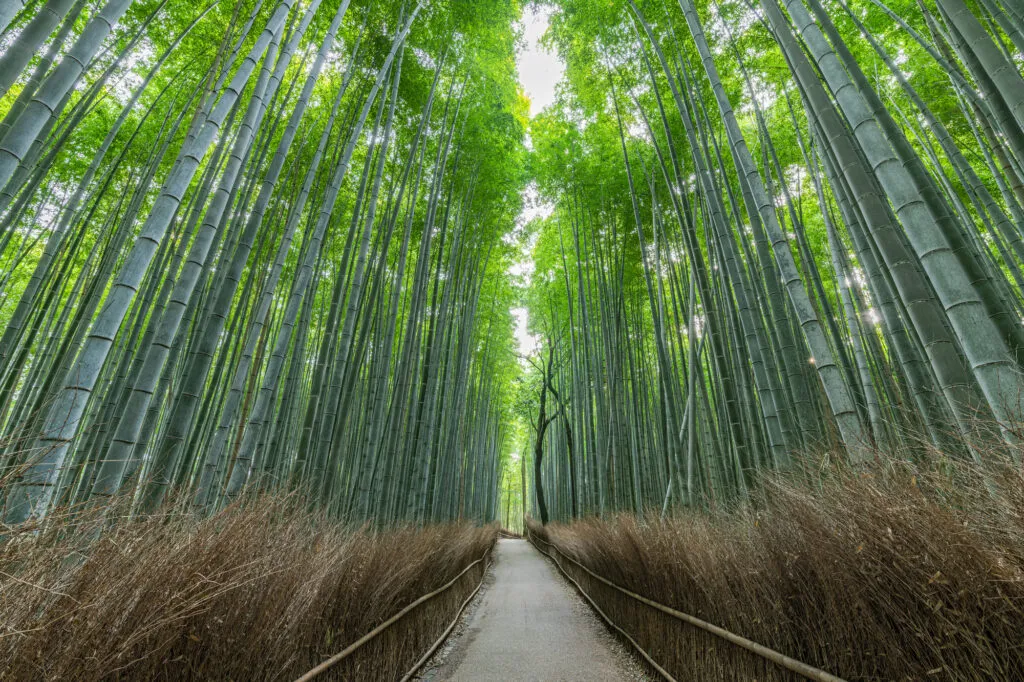
Arashiyama, one of Kyoto's most famous scenic spots, can be enjoyed in a wheelchair if you know the key points. Togetsukyo Bridge over the Katsura River has a well-maintained sidewalk, making it wheelchair accessible. The popular Bamboo Grove Path is a paved, flat path from the entrance to Nonomiya Shrine, but caution is advised as it becomes a steep slope as you go further in. Some areas of surrounding temples, such as Tenryu-ji Temple, are wheelchair accessible, so be sure to check in advance. There is also a foot bath at Arashiyama Station on the Randen (Keifuku Electric Railway), which is recommended for soothing your travel fatigue.
Fushimi Inari Taisha Shrine

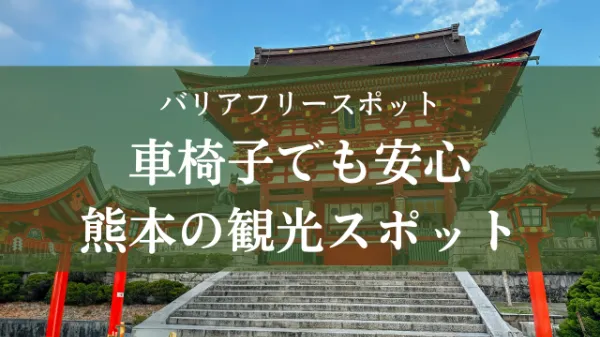
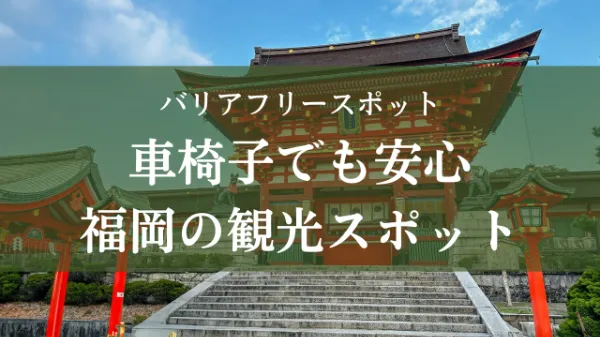
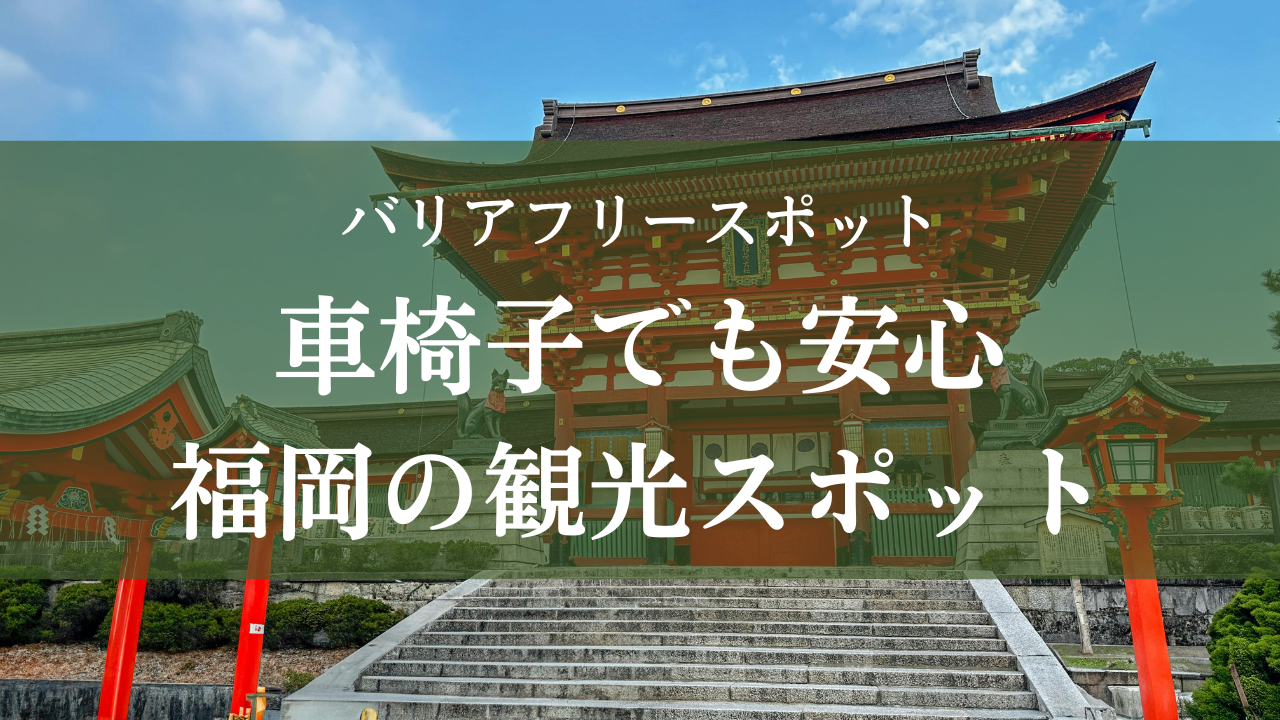
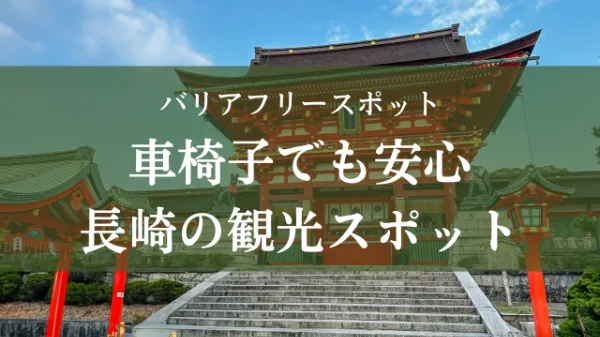
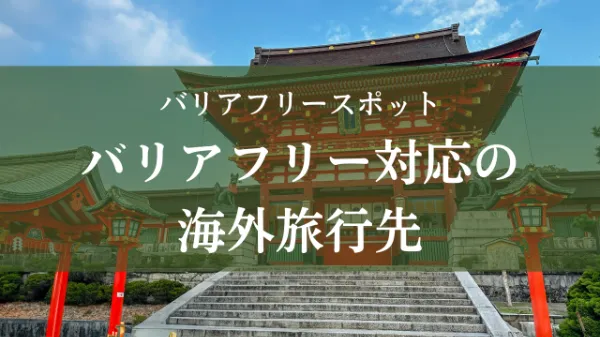
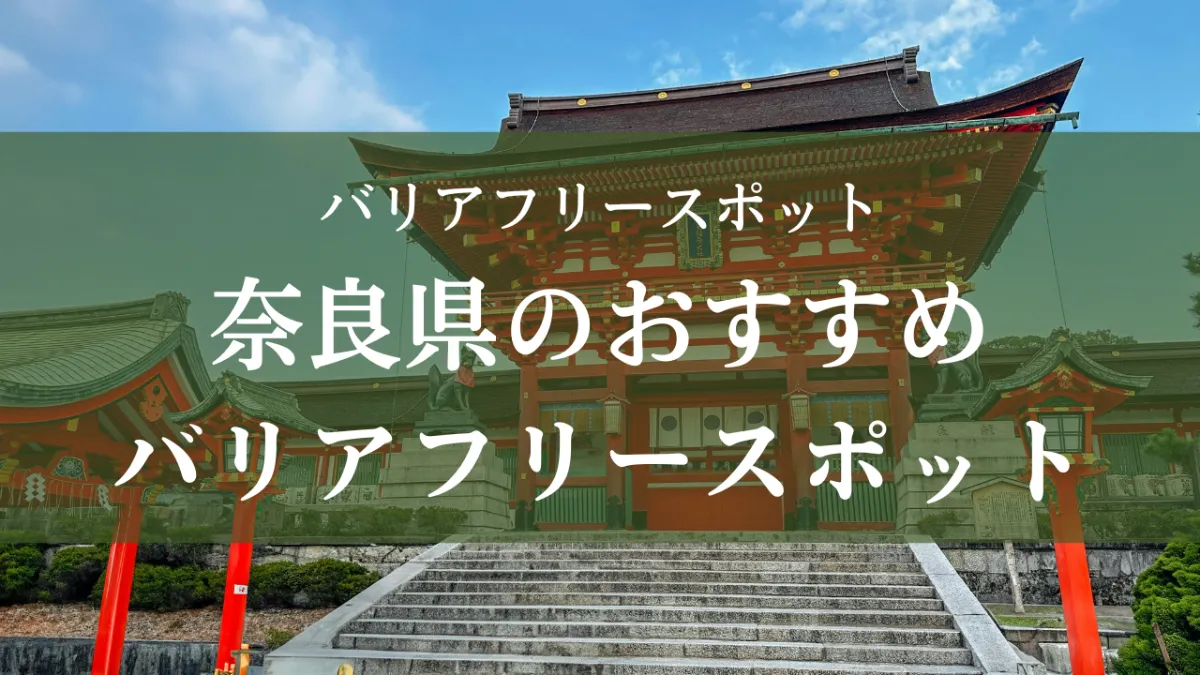
Fushimi Inari Taisha Shrine is world-famous for its countless rows of "Senbon Torii." Unfortunately, because the entire mountain is the object of worship, the approach to the summit has many steep stairs, making it extremely difficult to climb in a wheelchair. However, the areas around the main hall and the entrance to the Senbon Torii are flat, making it possible to experience a glimpse of the mystical atmosphere. It is worth visiting just to pray from the tower gate to the main hall and take a commemorative photo at the entrance to the Senbon Torii. There are also wheelchair-accessible toilets on the grounds.
Nijo Castle
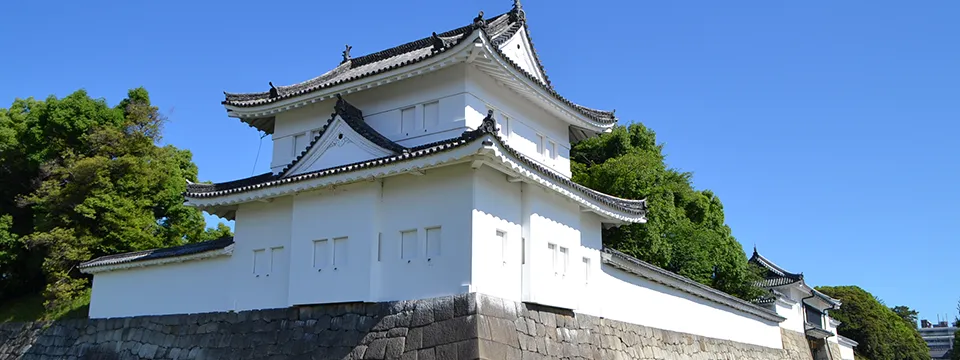
Nijo Castle, a World Heritage Site that witnessed the rise and fall of the Tokugawa clan, is a model case for barrier-free tourism. Wheelchair-accessible tour routes have been set up within the castle, allowing visitors to get up close and personal with the Karamon Gate, a National Treasure, and the Southeast Corner Tower, an Important Cultural Property. Parts of the interior of the Ninomaru Palace, which is normally inaccessible to wheelchair users, can be viewed by switching to a special wheelchair (please confirm in advance). The vast Ninomaru Gardens also have well-maintained pathways, allowing visitors to enjoy the beautiful scenery throughout the seasons. Accessible toilets and ramps have also been installed in various locations.
Barrier-free access! Recommended hotels for a safe stay in Kyoto
Choosing a place to relax after a long journey is one of the most important aspects of a barrier-free trip. Here we introduce Kyoto hotels that offer accessible rooms (barrier-free rooms and universal rooms) and are sure to provide a comfortable stay. The detailed facilities and latest availability of each hotel may change, so it is best to consult with an expert. Flat Travel, which specializes in barrier-free travel, will provide comprehensive support from suggesting rooms that meet your needs to booking, so please feel free to contact us.
Hotel Granvia Kyoto
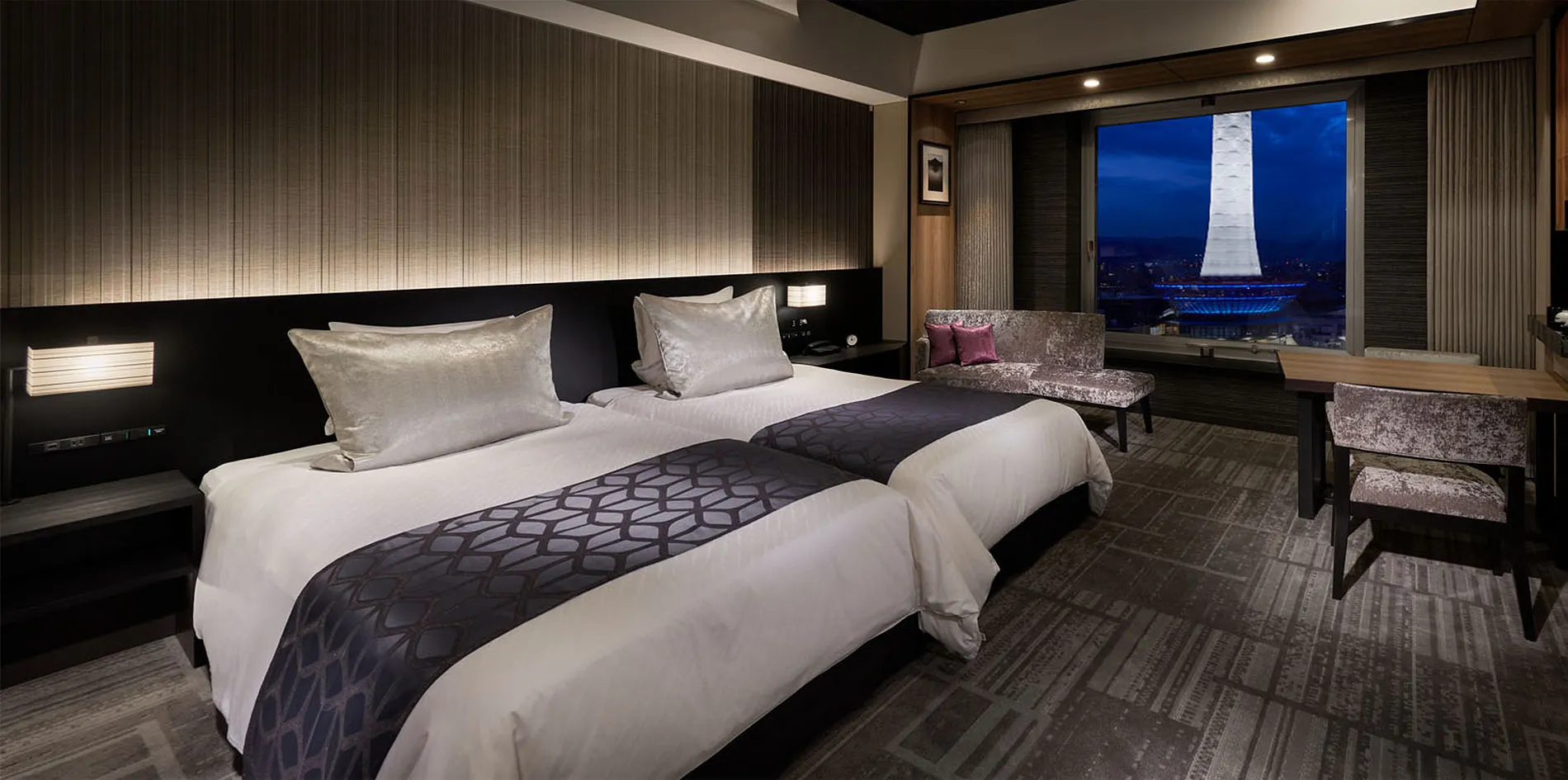
Directly connected to Kyoto Station, this hotel offers excellent access by Shinkansen and train. There are few steps within the hotel, making movement smooth. The barrier-free "Accessible Rooms" are spaciously designed to be comfortable for wheelchair users, and the bathrooms are equipped with handrails and shower chairs. Many of the hotel's restaurants are also wheelchair-friendly, making it ideal for those wishing to minimize the burden of mobility. For detailed facility information and reservations, please contact Flat Travel.
The Westin Miyako Kyoto

Located on a hill in Higashiyama, this long-established hotel boasts a stunning view of Kyoto city. After undergoing a major renovation, the hotel has further enhanced its barrier-free facilities. The spacious universal rooms are designed without steps, and handrails are installed in the bathroom and toilet. The hotel also has a spa that uses natural hot springs, allowing you to soothe your travel fatigue. A shuttle bus is also available from Kyoto Station, making access easy. Flat Travel will help you choose a room that suits your needs.
The Ritz-Carlton Kyoto
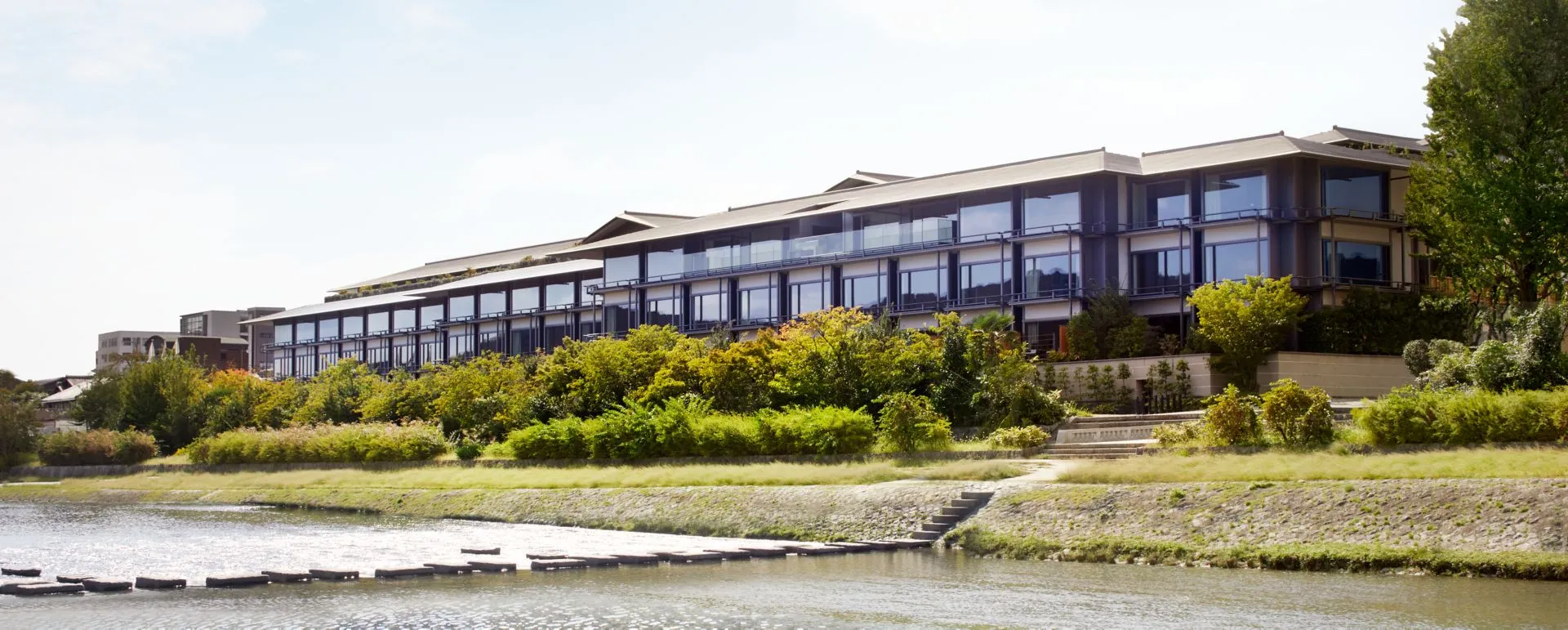
Located on the banks of the Kamo River, this luxury hotel offers the finest hospitality. Thorough consideration has been given to barrier-free access, and accessible rooms are available that combine sophisticated design with functionality. The corridors within the rooms are wide, and the bathrooms have sliding doors and handrails. With attentive support from the concierge, you can rest assured that you can leave sightseeing and dining arrangements to us. Recommended for those planning a special trip to Kyoto. Leave it to Flat Travel to propose the perfect plan.
Kyoto Brighton Hotel

Located to the west of the Kyoto Imperial Palace, this hotel offers a relaxing stay in a quiet environment. The atrium lobby creates an open space. The rooms incorporate universal design, with a layout that makes them easy for wheelchairs to move around in, and emergency call buttons are installed in the bathrooms for your peace of mind. The hotel's restaurants are also barrier-free, and you can enjoy a wide variety of cuisine, from Kyoto cuisine to French cuisine. Flat Travel is happy to discuss stay plans tailored to your needs.
For more information on barrier-free hotels in the Kyoto area, please see the article below.
Kyoto cuisine that can be enjoyed even by wheelchair users! Barrier-free restaurants
If you're traveling to Kyoto, you'll want to enjoy some delicious Kyoto cuisine. Here, we'll introduce you to some accessible restaurants and cafes that are wheelchair accessible. If you let us know when you make your reservation, we can make your reservation go more smoothly.
Kyoto cuisine and Kaiseki: Kyoto cuisine Honke Tankuma Main store
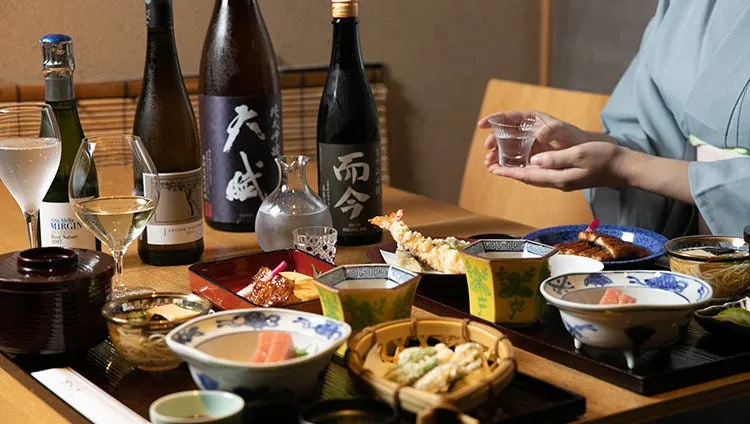
This long-established Kyoto cuisine restaurant was founded in 1928, and it is also very considerate of barrier-free access. There is an elevator, and guests can be guided to a private room in their wheelchair, so they can enjoy authentic kaiseki cuisine at their leisure without worrying about others. The delicate flavors made with seasonal ingredients will make your trip even more memorable. There is also a wheelchair-accessible toilet.
Obanzai and Japanese cuisine: Kyonai-no-Mura

Located near Nishiki Market, known as "Kyoto's Kitchen," this popular restaurant offers affordable Kyoto home-style cuisine, "Obanzai." The restaurant is primarily table seating, with relatively wide aisles, making it wheelchair accessible. Open from breakfast to lunch, it's a convenient place to stop by in between sightseeing. As you can sample a variety of different types of obanzai in small portions, it's recommended for those who want to experience Kyoto's food culture.
Cafe/Sweets Shop: Yojiya Cafe Sagano Arashiyama
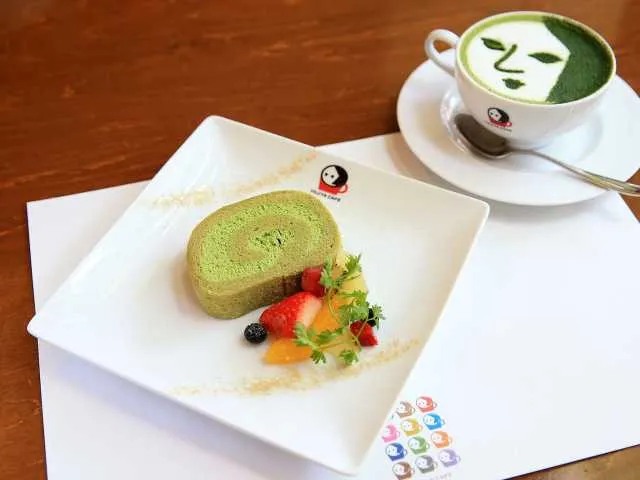
This is the Arashiyama branch of a cafe produced by Yojiya, famous for its oil blotting paper. You can enjoy Japanese sweets and light meals, such as matcha parfaits, while looking out at the beautiful garden. The store has a relatively flat structure, and there are tables that are wheelchair accessible. It's the perfect rest spot for a relaxing break during your walk around Arashiyama. As it is a popular cafe, it's best to visit with plenty of time to spare.
[2 days, 1 night] A model barrier-free sightseeing itinerary to fully enjoy Kyoto
For those who don't know where to go and how to get around, we have a two-day, one-night model itinerary that takes wheelchair access into consideration. You can adjust the itinerary to suit your physical strength and make good use of wheelchair-accessible taxis to enjoy sightseeing in Kyoto without any stress.
Day 1: A classic tour of the Higashiyama area and Kyoto city
After arriving at Kyoto Station, first take a wheelchair-accessible taxi to Kiyomizu-dera Temple in Higashiyama. Enjoy the spectacular view from the stage of Kiyomizu Temple via a wheelchair-accessible route. Afterwards, take a taxi to the Gion area and stroll along the flat area around Hanamikoji, where the cobblestone streets still retain their charm. Enjoy Kyoto cuisine for lunch at a barrier-free restaurant. In the afternoon, take the subway to Nijo Castle, a World Heritage Site, and tour the vast castle grounds. After the tour, take the subway back to the area around Kyoto Station and relax at your booked hotel.
Day 2: A course touring the picturesque Arashiyama and World Heritage sites
On the second day, take the JR Sagano Line to Saga-Arashiyama Station. From the station, take a relatively flat road to enjoy the scenery around Togetsukyo Bridge. Afterwards, stroll around the entrance to the bamboo forest path and refresh yourself by soaking up the negative ions. Have lunch and a rest at Yojiya Cafe Sagano Arashiyama or similar. In the afternoon, reserve a welfare taxi to go to Kinkaku-ji Temple. After admiring the glittering Shariden Hall, take the taxi back to Kyoto Station and head home.
Please also see the sightseeing plans for the Kyoto area introduced below.
Now you can rest assured! Barrier-free transportation and travel methods in Kyoto
Traveling within Kyoto City can be much smoother if you plan ahead. Here we will introduce the main means of transportation that are wheelchair accessible and some tips for using them.
Public transportation in Kyoto City (buses and subways)
Kyoto City Bus is increasingly introducing low-floor, stepless buses. If you tell the driver when you board, they will install a ramp to help you get on and off. However, not all bus stops are spacious, so you need to be careful when it's crowded or in narrow roads. On the other hand, the Kyoto Municipal Subway is a very user-friendly means of transportation, with elevators and multi-purpose toilets at all stations. There is also little space between the platform and the vehicle, making boarding and alighting smooth.
Using welfare taxis and nursing care taxis
Welfare taxis with lifts that allow wheelchair users to board while remaining in their wheelchairs, and care taxis that provide assistance with boarding and disembarking, are great ally for barrier-free travel. They can take you door-to-door to your destination, significantly reducing the physical burden. You can also rent a taxi by the hour to tour tourist spots. However, there are a limited number of taxis, and they generally require reservations, so we recommend making a reservation as early as possible once your travel dates are decided.
Travel by private car or rental car and parking information
If you want to travel freely at your own pace, renting a private car or a vehicle with disability access is convenient. Major tourist destinations often have designated parking spaces that can be used by people with disabilities who present their disability certificate, but the number of spaces is limited. The roads in central Kyoto are narrow and there are many one-way streets, so those who are not used to driving should be careful. It is a good idea to check the location and fees of parking lots in advance.
Frequently asked questions about accessible sightseeing in Kyoto
Here we have compiled some frequently asked questions and answers from travelers regarding barrier-free sightseeing in Kyoto. Please use this as reference for your travel plans.
Where can I rent a wheelchair?
Wheelchairs can be rented at Kyonavi (Kyoto General Tourist Information Center) on the second floor of the Kyoto Station Building, as well as at some social welfare councils. However, the number of wheelchairs is limited, and advance reservations are required in most cases. We strongly recommend that you inquire and make a reservation as soon as your travel dates are decided. Rental conditions and fees vary depending on the facility, so be sure to check in advance.
Can you easily find a multi-purpose toilet (a toilet for everyone)?
Multi-purpose toilets (known as "everyone toilets" in Kyoto City) are being installed in major stations, department stores, relatively new public facilities, and large tourist destinations. However, there are still many old temples and shrines, privately run stores, and other places that do not have them. If you use the barrier-free map "Kyoto Universal Tourism Map" provided by Kyoto City or a smartphone app to check the location of toilets in advance, you will be able to avoid panicking in an emergency.
Are there any assistance services?
Although not a public service, private nonprofit organizations and care providers may offer paid support services such as assistance with transportation while traveling or accompanying tourists on sightseeing trips. By searching for keywords such as "travel helper" or "outing support service" and consulting and booking in advance, you can enjoy your trip with peace of mind. Service content and fees vary depending on the provider, so it is a good idea to compare multiple providers.
Summary: Plan ahead for the best barrier-free sightseeing in Kyoto
Kyoto is a city steeped in history and culture. At first glance, it may seem like there are many barriers, but as we've shown in this article, with advance information gathering and careful planning, even wheelchair users can fully enjoy its charms. The key to success is to check the barrier-free information for the places you want to visit, create a reasonable schedule, and make good use of convenient transportation options. If you're worried about planning your trip on your own, consulting a specialized travel agency is a wise choice. We hope you'll make your Kyoto trip the best it can be.
For inquiries about barrier-free travel in Kyoto, contact Flat Travel
Flat Travel is a travel agency specializing in barrier-free travel, providing comfortable travel experiences for everyone, including wheelchair users, the elderly, and people with disabilities. In addition to the hotels and sightseeing plans introduced in this article, we also offer custom-made trips tailored to each customer's circumstances and preferences. Please feel free to consult our specialized staff about any concerns, no matter how small, such as detailed information about accommodation facilities, transportation arrangements, or concerns about assistance. We offer total support, from planning to booking, to ensure you have the best, most enjoyable Kyoto trip with peace of mind. Please feel free to contact us first.