- 5 Recommended Accessible Travel Destinations Around the World
- Japan
- Italy
- Spain
- Thailand
- Australia
- Canada
- Hawaii (USA)
- 5 points to help you choose the right Accessible travel destination
- Barrier-free access to public transportation
- Barrier-free accommodation facilities
- Barrier-free accessibility of tourist destinations
- Medical system and safety
- Cost performance
- For Accessible travel, leave it to Flat Travel
- Why Japan is the best accessible travel destination
- World-class accessible public transport
- Universal rooms in accommodation facilities are being developed under the law
- Good public safety and a comprehensive medical system
- Accommodating diverse diets and a culture of hospitality
- A thorough comparison of Japan and popular overseas accessible travel destinations
- Popular areas for accessible travel in Japan
- Tokyo: A city where cutting-edge accessible infrastructure and tourism come together
- Kyoto: Wheelchair-accessible World Heritage Sites and Temples and Shrines
- Osaka: City of Food and Entertainment
- Okinawa: Resorts with attractive accessible beaches
- Hokkaido: A vast land where you can enjoy magnificent nature
- How to plan and prepare for accessible travel
- Step 1: Decide when and how long you want to travel
- Step 2: Choose your destination and city
- Step 3: Find an accessible hotel
- Step 4: Arrange transportation
- Step 5: Talk to an Accessible Travel Expert
- Learn more about barrier-free information in Japan!
- Accessible Travel FAQs
- Is it okay if I don't speak the local language?
- Do I need to purchase overseas travel insurance?
- Can I rent wheelchairs and other care equipment on-site?
- How far in advance should you book your trip?
- Does traveling with a wheelchair cost more?
- For inquiries about accessible travel, contact Flat Travel
In this day and age when everyone can travel with peace of mind, there's no need to give up even if you have physical limitations. However, when it comes to planning your trip, questions like, "Which country will I be able to travel to comfortably?" and "What is Japan's barrier-free environment like?" will likely arise. In this article, an expert on barrier-free travel will provide detailed information and provide specific information on recommended overseas destinations, hidden charms of Japan, and how to choose the perfect travel destination for you.
5 Recommended Accessible Travel Destinations Around the World
One of the great attractions of traveling abroad is the differences in culture and scenery, but barrier-free environments vary from country to country. Here we introduce several countries and regions that are considered relatively accessible and chosen by many travelers. Use this as a reference to understand the characteristics of each country and find a travel destination that suits your wishes and physical condition.
Japan

In fact, Japan's barrier-free environment is said to be at a very high level even when viewed globally. Public transportation in particular has improved remarkably, and most urban stations are equipped with elevators and multi-purpose toilets. In addition, the number of accommodation facilities that are legally equipped with barrier-free rooms (universal rooms) is also increasing. The attentive spirit of "omotenashi" (hospitality) will also be a great help in ensuring that you can enjoy your trip with peace of mind.
Italy

Italy, the capital of art and history, is home to many World Heritage Sites, including the Colosseum in Rome and the museums of Florence. Because of its ancient cityscape, many of the streets are cobblestone, but major tourist facilities are increasingly installing ramps and elevators. It's also becoming easier to find barrier-free hotels and tour buses, especially in major cities like Rome and Milan. Since it can be difficult to make the interiors of historical buildings completely barrier-free, gathering information beforehand is key to a comfortable trip.
Spain

Spain, the land of passion, and Barcelona in particular, have incorporated universal design from the urban planning stage and are known as one of the world's leading barrier-free cities. There are many wide sidewalks and ramps, and subways and buses are designed to be wheelchair accessible. Even famous tourist sites like Sagrada Familia are making great strides in terms of accessibility. The warm climate and delicious food are also factors that will increase your travel satisfaction.
Thailand

Thailand, the Land of Smiles, is a popular travel destination thanks to its relatively low cost of living and friendly people. In urban areas such as Bangkok, barrier-free access is being promoted, particularly in large shopping malls and new hotels, but there are still many areas where sidewalks and public transportation are still in the process of being developed. For this reason, we recommend staying at a barrier-free hotel in a resort area as your base and taking advantage of shuttle services to enjoy a relaxing stay.
Australia

Australia, a vast country with magnificent natural scenery, is known for its strong awareness of accessibility throughout the country. In cities such as Sydney and Melbourne, public transportation, parks, and beaches are designed to be easily accessible for everyone. Many tourist facilities and national parks also have wheelchair-accessible pathways and toilets, making it a great travel destination for those who want to actively enjoy nature.
Canada

Like Australia, Canada is a country where vast natural landscapes and modern cities coexist. Even scenic spots like Niagara Falls and the Canadian Rockies often have ramps and accessible trails to observation decks. In urban areas like Vancouver and Toronto, public transportation is becoming increasingly barrier-free, making travel a comfortable experience.
Hawaii (USA)
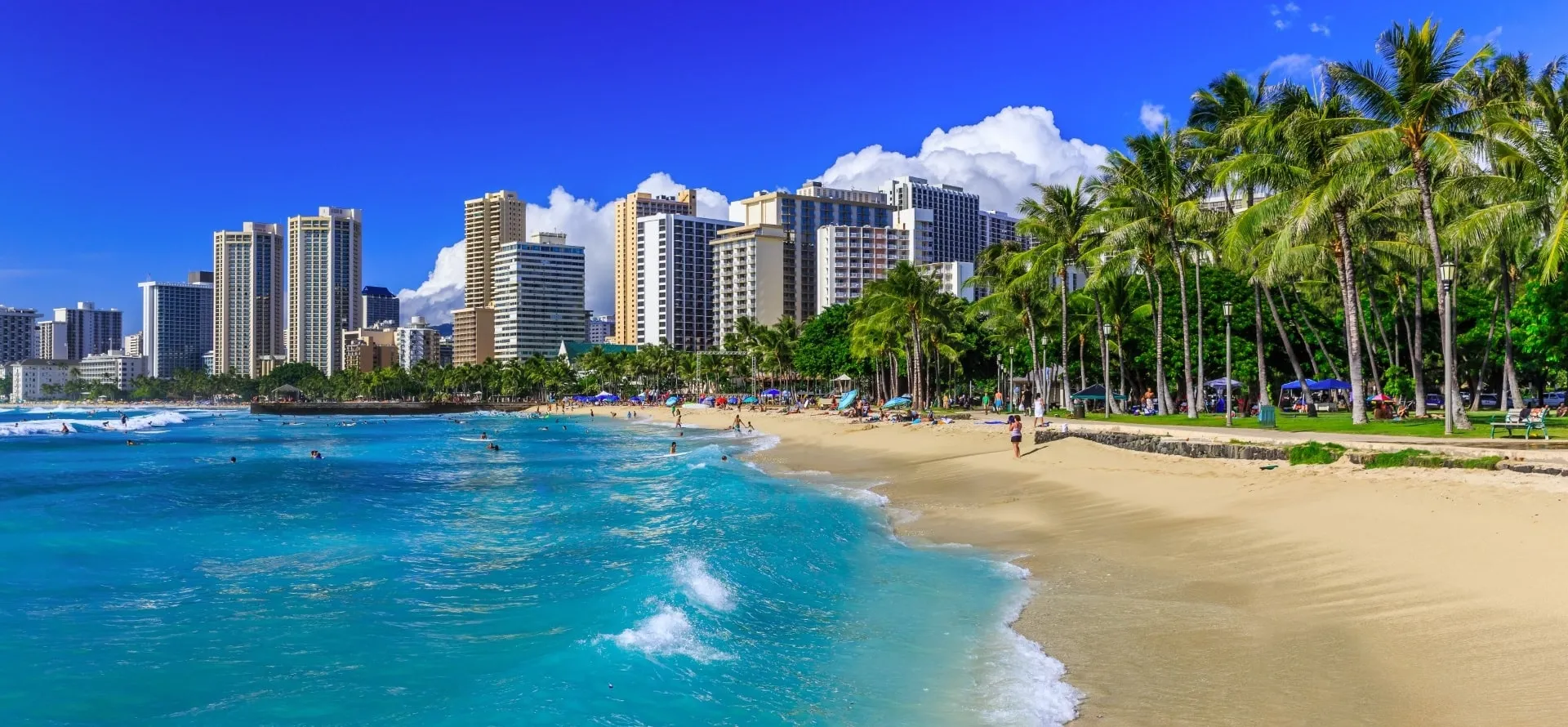
Hawaii, a familiar resort destination for many Japanese people, is also a good option for barrier-free travel. Many hotels and shopping centers around Waikiki comply with the Americans with Disabilities Act (ADA) and ensure accessibility. The environment where Japanese is easily spoken and the beaches where you can rent amphibious wheelchairs are also major points that make for a safe stay.
5 points to help you choose the right Accessible travel destination
With so many attractive travel destinations available, choosing the one that best suits your physical condition and desires is the first step to having a satisfying trip. Here we will explain five important points to check when considering a travel destination. By keeping these perspectives in mind, you will be able to make more specific and realistic travel plans.
Barrier-free access to public transportation
The comfort of transportation during your trip greatly influences your overall satisfaction with the trip. It's important to check how barrier-free the plane you'll be taking to your destination, as well as the local trains, buses, and taxis, are. For example, some key points to check are whether stations have elevators and ramps, whether low-floor buses are widely available, and whether it's easy to arrange a taxi that wheelchair users can board (a welfare taxi or universal design taxi).
Barrier-free accommodation facilities
One of the most important aspects of a hotel is finding a place to relax after a long day of travel. Be sure to check how common barrier-free rooms (universal rooms) are and what their quality is. It's important to check in advance whether the hotel has the necessary facilities for your physical condition, such as whether there are steps at the entrance or bathroom, whether handrails are installed in appropriate locations, and whether shower chairs are available for rental. Be careful, as there is a lot of detailed information that you won't find on the hotel's official website.
Barrier-free accessibility of tourist destinations
Another important point to consider is whether the tourist attractions you want to visit are accessible to those in wheelchairs or using a walking stick. Historical buildings and parks rich in nature can have many steps and gravel roads, making access difficult. Check the official website in advance to see if there are ramps, accessible toilets, and whether there is wheelchair-accessible viewing space, making it easier to plan your schedule on the day.
Medical system and safety
Especially when traveling abroad, it's a good idea to be aware of the local medical system in case you become unwell or injured. Make sure to find out whether there are hospitals that speak Japanese or English, and what the contact system is in place in case of an emergency. Good public safety at your destination is also an important condition for truly relaxing and enjoying your trip. We recommend checking the safety of your destination by referring to the Ministry of Foreign Affairs' Overseas Safety Information.
Cost performance
Travel costs are a concern for everyone. In addition to basic travel expenses such as airfare and accommodation, you need to consider a comprehensive range of costs, including local transportation, food, and admission fees to tourist attractions. Additional costs may be incurred if you use barrier-free taxis or assistance services. However, some countries and facilities offer discounts for people with disabilities, so it's important to consider your overall budget from multiple angles.
For Accessible travel, leave it to Flat Travel
If you're planning a accessible travel overseas, leave it to us. We're not just a travel agent. We'll produce your trip in its entirety, with the following three strengths:
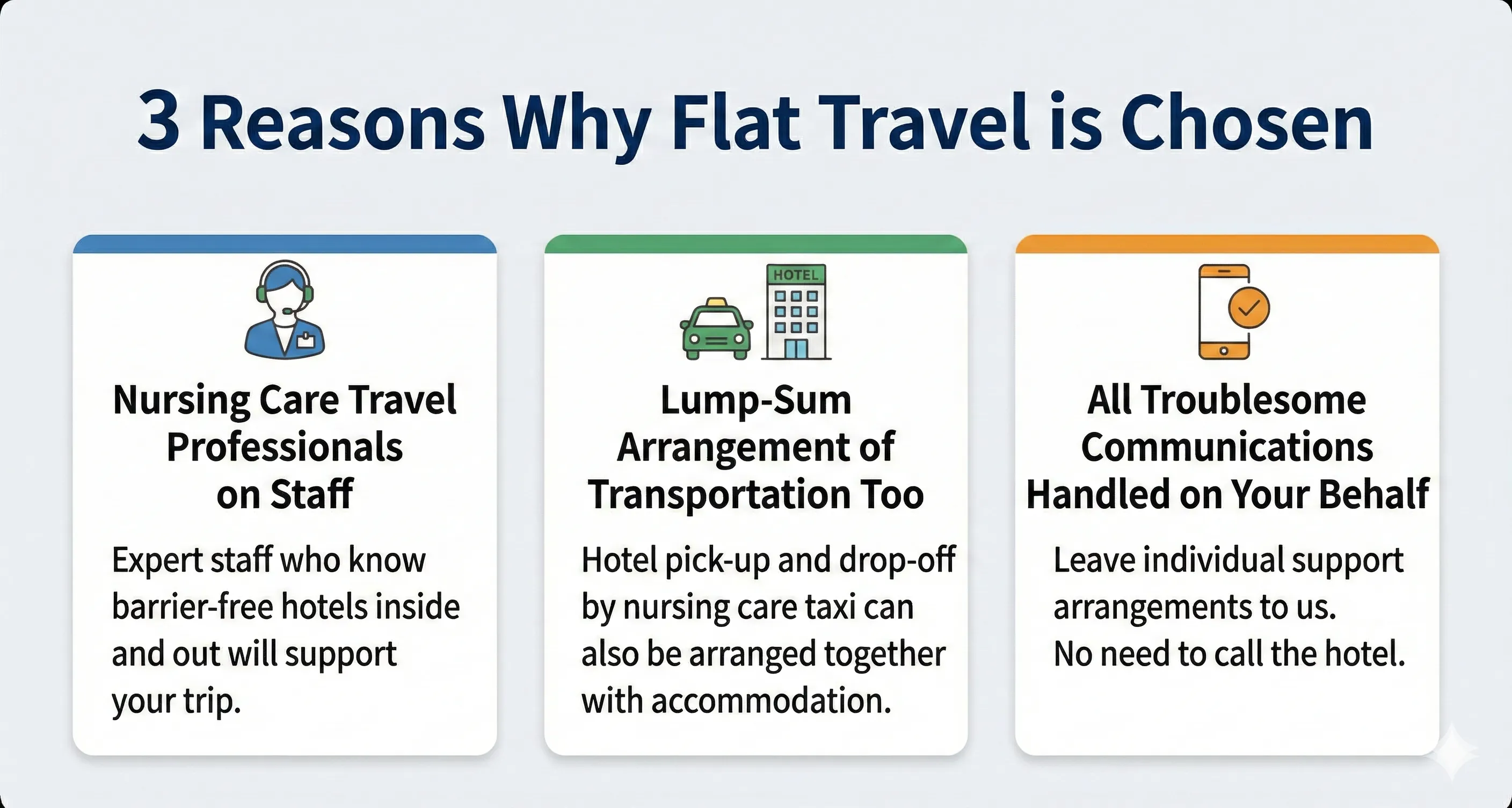
[Comprehensive safety standards] 24-hour support through medical cooperation
The only one of its kind in Japan! In collaboration with Kawasaki Rinko General Hospital, we have established a system where doctors can respond to problems through online consultations 24 hours a day. We promise the highest level of peace of mind in the industry, allowing us to respond immediately to sudden changes in health or any other unforeseen circumstances.
[Overwhelmingly easy] No need for troublesome phone checks. Leave it all to the professionals.
"Even when I call the hotel, it's a struggle just to explain the size of my wheelchair..." "Online information alone makes me worried about steps at the hotel..." There's no need to tire of endless confirmation work or explaining things over the phone anymore. Our barrier-free travel professionals will handle everything from checking door widths to ensuring proper flow on-site. We'll create a plan to prevent issues like "I got there and couldn't get in" and complete the reservation all in one go.
[Uncompromising quality] Custom-made by experienced concierges
Our dedicated planners will help you realize your dreams. Rather than a standard tour, we will create a high-quality trip tailored to your wishes.
We will guide you on a journey that will satisfy all your needs: safety, comfort, and excitement.
[List of special tour examples and plans]
[Consult with a concierge via WhatsApp (free)]
Why Japan is the best accessible travel destination
There are many attractive travel destinations around the world, but when judged comprehensively from the perspectives of accessibility, safety, and comfort, Japan may be said to be one of the world's most advanced countries in terms of barrier-free access. We will introduce in detail four specific reasons why Japan is particularly recommended as a travel destination.
World-class accessible public transport
Japan's public transportation system, especially its rail network, is at a very high level of barrier-free accessibility even by global standards. Most major stations in urban areas are equipped with elevators and multi-purpose toilets, and station staff provide courteous assistance when boarding and disembarking. Low-floor buses and universally designed taxis that allow passengers to board in their wheelchairs are also becoming more common. Shinkansen trains are equipped with wheelchair-accessible seats and multi-purpose rooms, creating an environment that allows smooth long-distance travel between cities.
Universal rooms in accommodation facilities are being developed under the law
In Japan, under the Act on Promotion of Smooth Mobility for Elderly People, Persons with Disabilities, etc. (Barrier-Free Act), accommodation facilities above a certain size are encouraged or even required to provide barrier-free guest rooms. As a result, there is an increasing trend for guest rooms incorporating universal design not only in new hotels in urban areas, but also in hot spring inns in rural areas. A major attraction is the increasing number of facilities that meet diverse needs, such as rooms without steps, bathrooms with handrails, and barrier-free baths that can be reserved for private use.
Good public safety and a comprehensive medical system
Japan is known worldwide as a safe country, and there are many places where you can walk around the city safely, not only during the day but also at night. This sense of security is a major benefit for travelers. Also, medical services are available in Japanese within the country, so if you do fall ill, you can receive appropriate treatment without any language barrier. Another reassuring point is that you can expect high-quality medical care anywhere in the country.
Accommodating diverse diets and a culture of hospitality
Japan's culture of "omotenashi" (hospitality) is also evident in the dining experience. Many restaurants and inns will accommodate individual requests, such as chopping or blending food, for those with allergies and dietary restrictions due to health reasons. Furthermore, the attentive and spontaneous support provided by staff at restaurants, accommodations, and transportation facilities will ease your travel anxieties and make your stay more comfortable.
A thorough comparison of Japan and popular overseas accessible travel destinations
We've explained Japan's appeal so far, but how does it compare to other popular international travel destinations? For example, when comparing the barrier-free accessibility of public transportation, Japan's railway network convenience and station facilities are often more advanced than European cities that retain their historic streetscapes. While Australia and Canada also have high standards for accommodation, facilities like Japan's hot spring inns, which combine unique culture with barrier-free access, offer a unique appeal. In terms of safety and the medical system, the sense of security in Japan, with no language barriers, is immense. In terms of cost, the weak yen has also been a plus, making travel relatively affordable for international travelers. Each country has its merits, but when looking at the overall balance, Japan's advantages are striking.
Evaluation criteria | Japan | Italy | Australia | Canada | Thailand |
|---|---|---|---|---|---|
public transport | ★★★★★ | ★★★☆☆ | ★★★★☆ | ★★★★☆ | ★★☆☆☆ |
Accommodation | ★★★★★ | ★★★☆☆ | ★★★★☆ | ★★★★☆ | ★★★☆☆ |
tourist spot | ★★★★☆ | ★★★☆☆ | ★★★★☆ | ★★★★☆ | ★★☆☆☆ |
Safety and Medical | ★★★★★ | ★★★☆☆ | ★★★★★ | ★★★★★ | ★★★☆☆ |
Cost performance | ★★★★☆ | ★★★☆☆ | ★★★☆☆ | ★★★☆☆ | ★★★★★ |
Popular areas for accessible travel in Japan
We hope you now understand that Japan is well-suited for barrier-free travel. So, which areas of the country are particularly popular? Here we introduce five popular areas, each with its own unique charm. Learn about the unique features of each area and consider them as potential destinations for your next trip.
Tokyo: A city where cutting-edge accessible infrastructure and tourism come together
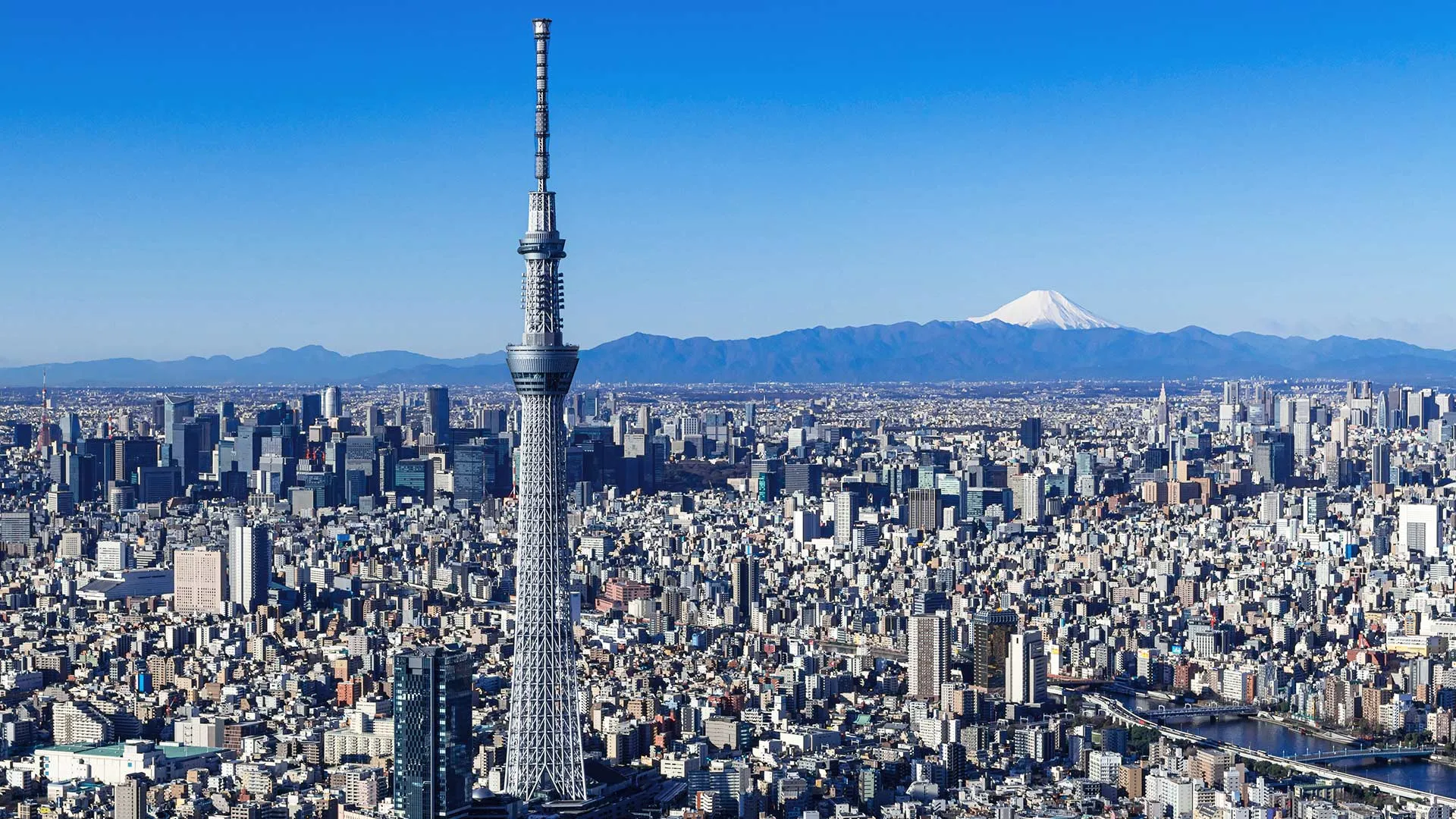
Tokyo, one of the world's leading cities, has made great strides in making its transportation infrastructure barrier-free, making it easy for wheelchair users to get around. Many of the latest commercial facilities, art museums, and observation decks are fully equipped with universal design, allowing you to enjoy your time without stress. Another attraction of Tokyo is the wide range of barrier-free hotels and restaurants to choose from. An exciting experience awaits, where traditional culture and cutting-edge urban functions are combined.
10 recommended barrier-free hotels in Tokyo!
Kyoto: Wheelchair-accessible World Heritage Sites and Temples and Shrines
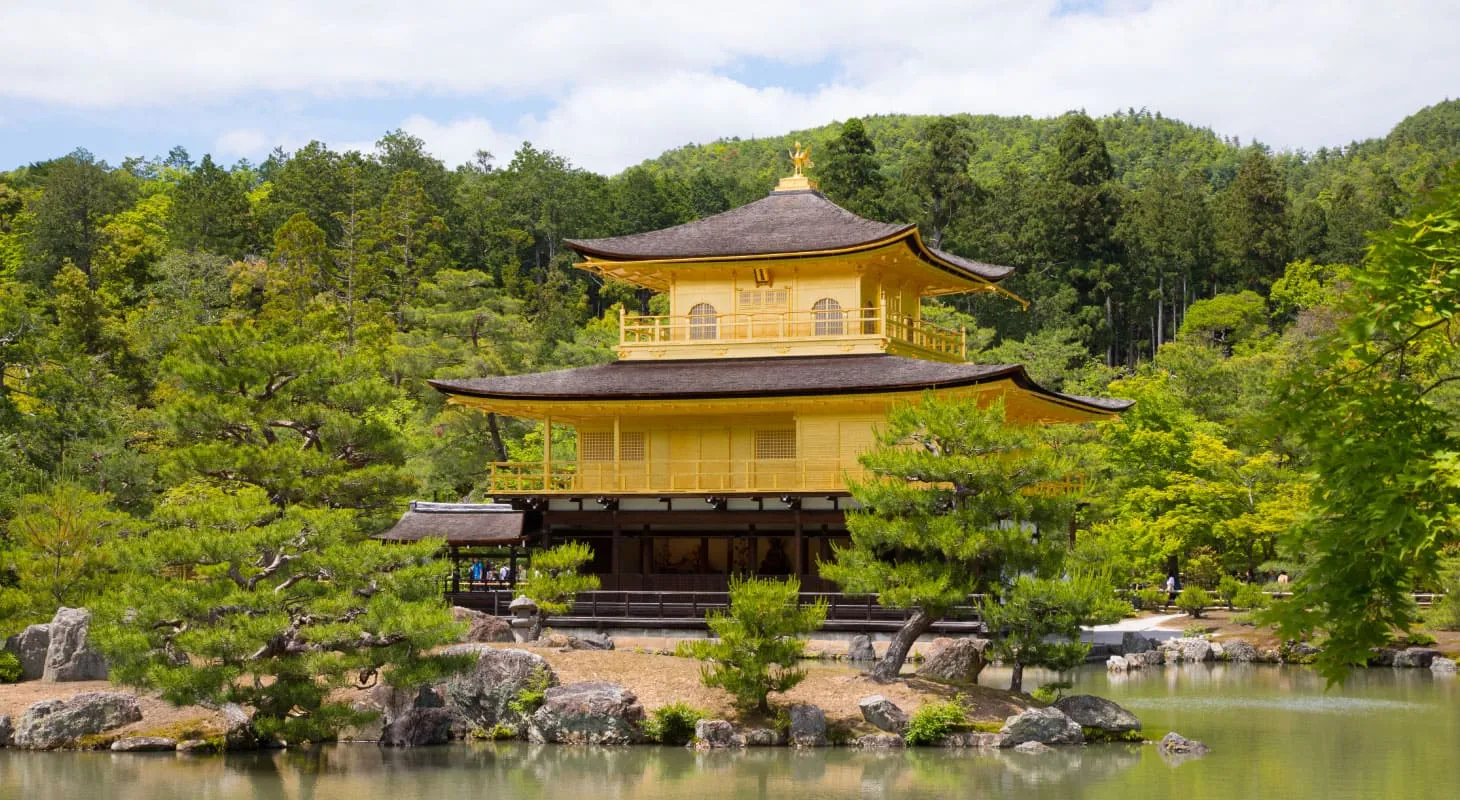
The ancient capital of Kyoto may have an image of stone-paved streets and many steps, but in recent years, it has steadily made progress in making itself barrier-free. World Heritage sites such as Kiyomizu-dera Temple and Kinkaku-ji Temple have installed ramps and created wheelchair-accessible viewing routes. Not all locations are fully accessible, but if you gather information in advance, you can fully enjoy the cityscape steeped in history and culture. One good option is to use a wheelchair-accessible sightseeing taxi.
The definitive barrier-free hotel in Kyoto!
Osaka: City of Food and Entertainment
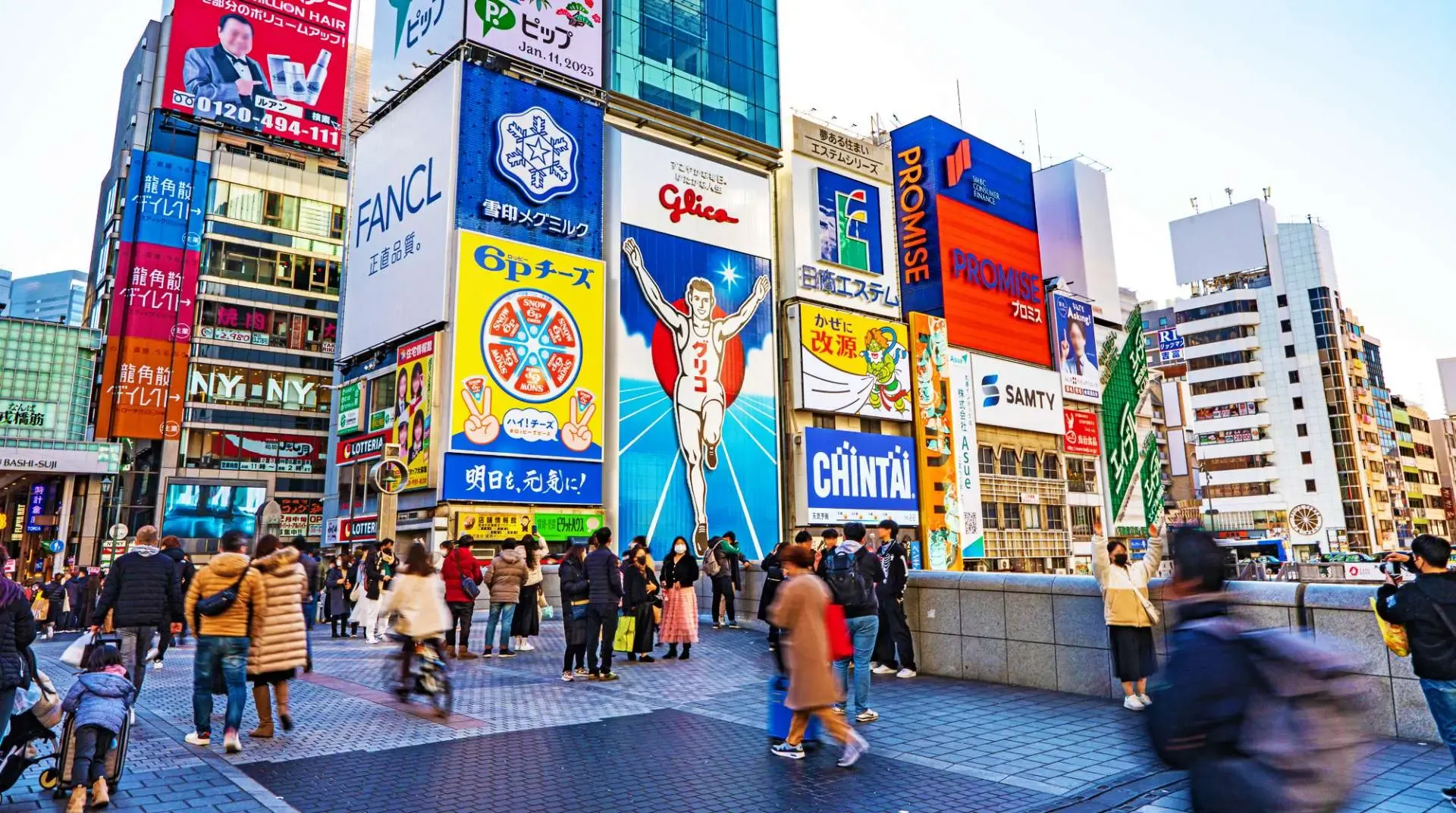
Known as the "city of gourmets," Osaka has a vibrant atmosphere. Areas like Dotonbori and Shinsekai are crowded, but the arcades mean you can enjoy them regardless of the weather. Universal Studios Japan (USJ) also publishes accessibility information for each attraction and offers extensive services for wheelchair users. If you're looking for delicious food and entertainment, Osaka is a must-visit destination.
15 recommended barrier-free hotels in Osaka!
Okinawa: Resorts with attractive accessible beaches
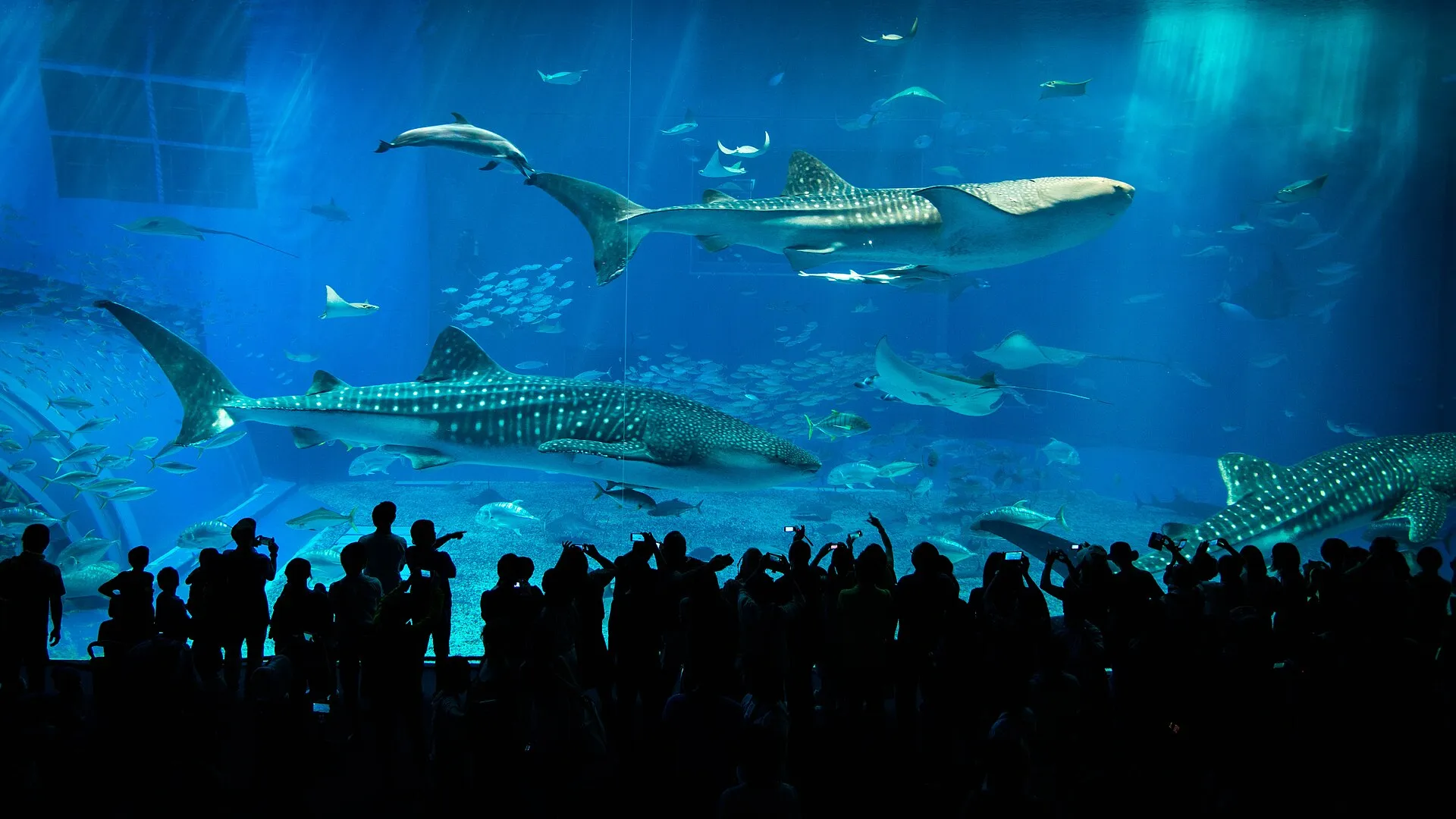
Okinawa, known for its beautiful ocean and warm climate, is making progress in providing barrier-free access as a resort destination. Some beaches offer rental services for amphibious wheelchairs that make it easy to move around on the sand, allowing anyone to enjoy the ocean with ease. Major tourist facilities, including the Churaumi Aquarium, are also based on barrier-free design. Recommended for those who want to enjoy the tropical nature at a leisurely pace.
Hokkaido: A vast land where you can enjoy magnificent nature

The charm of Hokkaido lies in its vast, endless plains and the beautiful nature of the four seasons. Not only can you enjoy the scenery from your car window while driving, such as the lavender fields of Furano and the hills of Biei, but there are also many facilities, such as Asahiyama Zoo, that are making their premises barrier-free. Another pleasure of traveling is the gourmet food made with fresh seafood and abundant agricultural products. The spacious spaces will allow you to enjoy a trip that will refresh both your body and mind.
How to plan and prepare for accessible travel
Once you've found a travel destination that suits you, the next step is to start making concrete plans and preparations. It's no exaggeration to say that advance preparations can make all the difference between a successful and a failed trip, especially when it comes to barrier-free travel. Here are five steps to help you smoothly prepare for your trip. Take each step steadily and you'll be able to depart with peace of mind.
Step 1: Decide when and how long you want to travel
First, decide when and for how long you'll be traveling. Spring and autumn are recommended, as the weather is mild and comfortable, putting less strain on the body. Also, avoiding long weekends and summer vacation periods when tourist spots are crowded will allow you to travel at a more relaxed pace. It's important to plan a reasonable itinerary, taking into account your own physical condition and the schedules of those traveling with you.
Step 2: Choose your destination and city
Using the information you have learned so far as a reference, choose a destination that suits the purpose and theme of your trip. For example, if it is your first barrier-free trip, big cities like Tokyo or Osaka, which are relatively easy to get around and have many options, might be a good choice. If you want to be soothed in nature, you might choose Hokkaido or Okinawa, or if you want to experience history and culture, you might choose Kyoto. Thinking about what you want to do as a base will help you narrow down your destination.
Step 3: Find an accessible hotel
Because there are only a limited number of accessible rooms, it's important to book your hotel as soon as possible once your travel dates are decided. When doing so, you should check not just the name "accessible room," but also detailed information such as the width of the room entrance and bathroom doors, whether there are steps, and the location of handrails. This information is often not available on the hotel's official website, so it's best to consult an expert. If you need detailed facility information, instead of contacting the hotel directly, you can contact Flat Travel, which is well-versed in the barrier-free information of each facility, and we will handle everything from confirmation to booking on your behalf.
Step 4: Arrange transportation
Arrange your flight or bullet train to your destination, as well as transportation within your area. Airlines and railway companies offer services and special seats for wheelchair users, so be sure to mention this when making your reservation and request the necessary assistance. In addition to using public transportation, you can also make advance reservations for welfare taxis, elderly care taxis, and barrier-free rental cars to ensure a smooth journey.
Click here for the Shinkansen Wheelchair Access Guide
Step 5: Talk to an Accessible Travel Expert
If you find it difficult to gather information and make individual arrangements, the most reliable and safe way is to consult a travel agency that specializes in barrier-free travel. Experts can provide detailed local barrier-free information that you won't find on a website alone, and propose the best plan to suit your individual physical needs. By leaving all the necessary arrangements, such as hotels, transportation, and local assistance services, to us, you can significantly reduce the burden of preparations and focus on truly enjoying your trip.
Learn more about barrier-free information in Japan!
Flat Travel is a professional team of caregiver travel providers offering barrier-free travel throughout Japan.
We collect barrier-free information from all over Japan on a daily basis and propose it to our customers, so we have a wide range of recommended tour information that we can provide. Please check out the detailed explanations on the following page.
The Classic Golden Route of Three Capitals. Tokyo, Kyoto, Osaka & Nara 8 Days.
Okinawa Trip: A 4-Day Accessible Getaway for Wheelchair Users – Beach Resorts & Experiences
Safe for Wheelchair Users & Seniors! Japan Barrier-Free Tours
Accessible Travel FAQs
Many people have questions and concerns when planning a barrier-free trip. Here we have compiled some of the most frequently asked questions and their answers. Please use this as reference when preparing for your trip.
Is it okay if I don't speak the local language?
When traveling abroad, it is possible to communicate in many situations if you have a translation app on your smartphone or a phrasebook with simple conversations. English is often spoken in major tourist spots and hotels. Of course, if you are traveling within Japan, you don't have to worry about language. If you are worried, joining a tour with a Japanese guide is a good option.
Do I need to purchase overseas travel insurance?
When traveling abroad, we strongly recommend taking out overseas travel insurance to prepare for any illness, injury, or trouble that may occur. If you have a chronic illness, it is especially important to check with your insurance company in advance to see if your illness is covered. Choosing a plan that covers not only medical expenses but also rescue costs and damage to personal belongings will allow you to travel with greater peace of mind.
Can I rent wheelchairs and other care equipment on-site?
Depending on the country and city, there are companies that offer rental services for nursing care products such as wheelchairs, shower chairs, and portable toilets. However, as there are many areas where services are not as well-equipped as in Japan, it is necessary to check in advance whether they are available and how to make a reservation. Rental services are available in many cities in Japan.
How far in advance should you book your trip?
The number of accessible rooms and wheelchair-accessible seats on airplanes and bullet trains is limited. For this reason, we recommend starting your travel plans as early as possible. If you are traveling during popular tourist seasons or long holidays, it is best to make reservations six months to a year in advance to ensure you get the accommodation and flight you want.
Does traveling with a wheelchair cost more?
It doesn't necessarily mean that travel will be more expensive. While additional costs may be incurred due to using welfare taxis or having a caregiver accompany you, there may also be discounts for people with disabilities available on public transportation and at tourist facilities. Costs vary greatly depending on your travel style and the services you use, so it's important to get a thorough estimate in advance and make a plan that fits your budget.
For inquiries about accessible travel, contact Flat Travel
Thank you for reading this far. Planning a barrier-free trip can take a lot of time and effort in gathering information and making arrangements. If you feel even the slightest bit anxious or confused, please leave it to our experts. Flat Travel is a travel agency specializing in barrier-free travel, catering to each individual's wishes and physical condition. Utilizing our extensive knowledge and network, we will plan your trip from start to finish, from selecting a barrier-free hotel to arranging transportation and on-site support. We will turn your travel anxieties into peace of mind and help you create the best memories, so please feel free to contact us for a consultation.