The ancient capital of Kyoto is known for its historic temples, shrines, and beautiful cityscapes, but there are also many slopes, cobblestone streets, and crowded areas, making it difficult for wheelchair users and the elderly to get around. In this article, we'll explain in detail about "caregiver taxis," a great ally for sightseeing in Kyoto, including pricing, tips on how to choose one, and recommended model sightseeing itineraries. Use this as a reference to plan a safe and comfortable trip to Kyoto.
Use a care taxi to travel around Kyoto! Features and benefits

Nursing care taxis help everyone enjoy Kyoto, a city steeped in history and culture. Specialized drivers will safely and comfortably transport people in wheelchairs or stretchers, or those with walking difficulties, to their destinations. A major attraction is being able to enjoy sightseeing at your own pace without having to worry about the hassle of transferring between public transportation or getting through crowds.
What is the difference between this and a regular taxi?
Unlike regular taxis, care taxis are specially designed to ensure that users travel safely and comfortably. The biggest difference is in the equipment of the vehicle and the expertise of the driver. They are not just intended to transport people, but also to provide assistance services for travel, and are characterized by the use of welfare vehicles and drivers with care-related qualifications.
You can board in a wheelchair or on a stretcher
Many of the vehicles used in nursing care taxis are equipped with lifts and ramps so that passengers can get on and off smoothly while in a wheelchair or on a stretcher. This means that users do not need to transfer from their wheelchair when getting on and off, significantly reducing the physical burden. The vehicle is also equipped with a device to safely secure the wheelchair, and consideration is given to the shaking while driving.
Rest assured with dedicated assistance drivers
Nursing care taxi drivers not only have driving skills, but also specialized knowledge and skills in assisting with care. In many cases, they hold qualifications at the level of nursing care worker initial training (formerly known as home helper level 2) or higher, and will not only assist with boarding and disembarking, but also assist with moving around the room as needed. Because they are handled by professionally trained drivers, users and their families can rest assured that their transportation will be in their hands.
How to Choose a Care Taxi in Kyoto | 5 Points to Avoid Disappointment

There are many nursing care taxi companies in Kyoto, so you may be unsure which one to choose. Here are five points to check before booking to help you find a company that suits your needs. By checking these points, you will be able to use the service with greater peace of mind.
Check compatible vehicle models and equipment
First, it's important to check whether there is a vehicle that is suitable for the user's physical condition and the number of passengers. There are a variety of types, from vehicles with ramps that can accommodate standard wheelchairs to large vehicles with lifts that can accommodate reclining wheelchairs and stretchers. When making a reservation, it's a good idea to accurately communicate the size and type of wheelchair and the number of passengers so that the most suitable vehicle model can be suggested.
Check the driver's qualifications
The qualifications held by the driver are also an important criterion for using the service with peace of mind. For example, if a driver holds official qualifications such as "Initial Care Worker Training" or "Care Worker," you can expect more specialized assistance. Also, if the driver has qualifications related to life-saving skills, you will feel more reassured in the event of an emergency. We recommend checking the qualifications on the company's website.
Is the fee structure clear?
To avoid any trouble with fees, it is essential to make sure that the fee structure is clear. In addition to the fare, additional fees such as basic assistance fees, equipment rental fees, and reservation fees may be incurred. Choosing a company that is highly transparent, such as one that clearly lists its fees on its website and provides a total estimate when you inquire, will give you peace of mind.
Easy reservations and foreign language support
Whether or not you can make a reservation smoothly over the phone or via the website is also a factor that affects ease of use. Whether or not the hotel supports foreign languages is especially important for travelers from overseas or those unfamiliar with Japanese. Checking in advance whether there are staff who can speak English and whether there is a reservation form available in multiple languages will help ensure smooth communication.
"Why not leave all the hassle of preparing for barrier-free travel to the professionals?"
"Even if there is a tourist spot I want to visit, I don't know if I can actually stay there given my physical condition..." If you have such concerns, don't worry. Flat Travel is not just a travel agency. As experts in barrier-free travel, we have a vast amount of original research data.
・Support from caregiver travel professionals who are familiar with every corner of tourist destinations.
We are professionals who will understand and confirm even the smallest details, such as how to board in a wheelchair and the driver's caregiving experience. No more wasting time wondering, "Can I go?"
・Easily book travel and hotels all at once
・We will provide a one-time quote that includes not only hotel reservations but also arrangements for taxis with lifts and taxis for caregivers. This will save you the trouble of contacting various parties and making separate arrangements.
- We can also make flexible adjustments to suit your situation, such as changing the type of meal or arranging for assistance staff on the day.
Inquire about nursing care taxis via Whatsapp
Check information on nursing care taxis across Japan
Explaining the average price and breakdown of nursing care taxi fares in Kyoto
Nursing care taxi fares may seem complicated at first glance, but understanding the breakdown will make it easier to choose a plan that suits your needs. Here we will explain the general fare structure for nursing care taxis in the Kyoto area and any additional costs that may be incurred.
Time-based and metered fares
Nursing care taxi fares are mainly divided into two types: hourly fares and metered fares. Metered fares are similar to regular taxis in that the fare is calculated according to the distance traveled, and are considered suitable for short distance travel. On the other hand, hourly fares are priced in 30-minute or hourly increments, and are suitable for long-distance travel, such as when chartering a taxi for sightseeing or when traffic congestion is expected.
Additional fees such as basic assistance fees and equipment rental fees
In addition to the fare, various additional fees may apply. Typical fees include a "basic assistance fee" for the driver to help passengers board and disembark, and an "equipment rental fee" for special equipment such as reclining wheelchairs or stretchers. Additional fees may also be charged for special circumstances, such as late-night or early-morning trips or assistance with stairs.
Private rental fee for sightseeing use
If you're planning on sightseeing in Kyoto for a few hours to a full day, there are generally private rental plans available. For example, there are "4-hour private rental plans" and "8-hour private rental plans," which allow you to freely visit multiple tourist spots within the time limit. The price often includes transportation and basic assistance fees, but it's important to note that highway tolls, parking fees, and admission fees will be charged separately.
Things to note when getting a quote in advance
We recommend getting quotes from multiple companies before using a service. When doing so, be sure to provide as much detail as possible, such as the date and time of use, departure and destination, whether or not there will be any stops, the user's physical condition, the type of assistance required, and the desired vehicle type. By getting quotes in writing or by email and carefully checking the services included in the price and whether there are any additional fees, you can avoid unexpected expenses on the day.
How to reserve a care taxi in Kyoto and what to do on the day

To use a care taxi smoothly, it is important to understand the preparations beforehand and the process on the day. Here we will explain the general procedure, from the appropriate time to make a reservation, to boarding the car on the day and payment. Even if you are using a care taxi for the first time, you can proceed with preparations with peace of mind by referring to this process.
When is the best time to make a reservation?
It is advisable to make reservations as early as possible. Reservations tend to be concentrated especially during the cherry blossom and autumn foliage seasons, weekends, and public holidays, so we recommend that you start making arrangements as soon as you have decided on the date of use. Generally, if you make a reservation between one month and one week in advance, it will be easier to secure the date, time, and car model you want. Last-minute reservations may be accommodated if there is availability, but this is not guaranteed.
List of information to provide when making a reservation
When making a reservation, please provide the following information accurately to ensure a smoother service on the day:
1. User's name and contact details
2. Desired date and time of use
3. Pick-up and drop-off locations (including building name and room number)
4. Number of passengers
5. Type of wheelchair (standard, reclining, etc.) and whether or not a stretcher will be used
6. Type of assistance required (e.g., transfer from bed to wheelchair, assistance with stairs, etc.)
7. Length of stay at destination and desired stops
Reservation procedure by phone or website
Many nursing care taxi companies allow you to make reservations by phone or through the reservation form on their official website. If you make a reservation by phone, make a note of the list of information you need to provide in advance to avoid any hassle. If you use the website form, fill in the required information accurately and wait for confirmation from the company after submitting. It is important to not hesitate to ask any questions you may have.
Flow on the day of boarding and payment method
On the day, the driver will pick you up at the designated location at the reserved time. The driver will assist you on board and ensure it is safe before departing for your destination. After arriving at your destination, they will also help you get off the vehicle and move indoors if necessary. Payment is generally made at the end of the service. In addition to cash, some companies accept credit cards and electronic money, so it is a good idea to check the available payment methods when making a reservation.
[By purpose] 4 recommended nursing care taxi companies in Kyoto
There are several nursing care taxi companies in Kyoto City, each with their own unique features. Here we introduce four recommended companies based on the quality of their service, the comprehensiveness of their tourist information, and their ability to provide support in the local community. Please use this as a reference when choosing a company that suits your needs.
Kyoto MK Taxi
Kyoto MK Taxi is a major taxi company known for its high-quality customer service. They also have a wide selection of vehicles for people with disabilities, and in addition to the regular nursing care taxi service, you may also be able to choose to travel in a high-quality vehicle such as a hire car. They also often have drivers who can speak foreign languages, making them a great choice for travelers from overseas. They are recommended for those looking for attentive assistance and a comfortable interior space.
Yasaka Sightseeing Taxi
As the name suggests, Yasaka Sightseeing Taxi provides services specializing in sightseeing in Kyoto. A major attraction is that the drivers, who are well-versed in Kyoto's history and culture, also act as tour guides. You can expect support based on their expert knowledge, such as suggestions for wheelchair-friendly sightseeing routes and information on barrier-free restaurants. This service is perfect for those who want to make the most of their sightseeing.
Miyabi Nursing Care Taxi
Miyabi Care Taxi is a company that is known for its attentive service and close ties to the local community. They are often flexible in providing support for everyday outings such as medical appointments, shopping, and visiting the grave, as well as for sightseeing. They tend to be chosen by those who want warm and considerate service that is tailored to the individual circumstances of each user.
Sakura Welfare and Nursing Care Taxi
Sakura Welfare and Nursing Care Taxi specializes in welfare transportation, and is said to be well-known for the high level of nursing care skills of its drivers. They may also transport people who require medical care, such as those using stretchers and medical oxygen. They are a reliable option for those who want more specialized assistance and peace of mind when entrusting long-distance travel to a company.
Check nursing care taxi prices across Japan in one go!

"It's a lot of work to search for businesses in each area and contact them one by one."
With Flat Travel, you can get quotes from affiliated businesses across the country all at once, simply by telling us the area you want to go to, the dates, and the type of wheelchair you need.
We can also arrange trips across multiple regions at once.
You can specify a driver who can speak a foreign language.
You can check the breakdown of fees in advance, so you can rest assured
Request a free bulk quote
Feel free to consult via Whatsapp
A model trip to Kyoto by carer taxi for barrier-free sightseeing
By renting a caregiver taxi, you can efficiently tour Kyoto's tourist attractions at your own pace. Here we introduce two recommended barrier-free sightseeing itineraries that wheelchair users can enjoy without difficulty. Create a travel plan that suits your time and physical strength.
[Half-day course] World Heritage course visiting Kinkakuji Temple and Ryoanji Temple
This approximately four-hour course takes you to two of Kyoto's most iconic World Heritage sites. First, head to Kinkaku-ji Temple, famous for its glittering Shariden Hall. There is a wheelchair-accessible route within the temple grounds, allowing you to get a close-up look at the glittering Golden Pavilion across the pond. Next, visit Ryoan-ji Temple, known for its rock garden. You'll view the garden from the veranda of the abbot's chamber, allowing you to fully enjoy its tranquil beauty even while in a wheelchair. A caregiver taxi will make travel between the two temples smooth.
[1-day course] From Kiyomizu-dera to Gion! A course to enjoy the classic spots
This is a private tour that lasts approximately eight hours, allowing you to thoroughly enjoy Kyoto's most popular spots. In the morning, you'll visit Kiyomizu-dera Temple, known for its Kiyomizu Stage. There is a wheelchair-accessible route, and you can safely take a taxi up the hilly approach to the temple. For lunch, you'll enjoy a barrier-free Kyoto restaurant in the Gion area. In the afternoon, you'll stroll through Gion and Hanamikoji, where the charm of the cobblestone streets remains. A caregiver taxi will be waiting, allowing you to take breaks and enjoy the Kyoto atmosphere without any stress.
Click here for information on wheelchair accessible sightseeing spots in Kyoto
In addition to the places introduced in this article, Kyoto has many other attractive tourist spots that can be enjoyed by wheelchair users. You can visit a variety of places, such as the area around Togetsukyo Bridge in Arashiyama and Shimogamo Shrine, which is wheelchair accessible. For more information on barrier-free tourist spots in Kyoto, please see the related article.
3 Barrier-Free Hotels in Kyoto to Book Along with a Care Taxi
For a comfortable trip to Kyoto, it's extremely important to consider not only transportation options but also barrier-free accommodation options. In addition to travelling by care taxi, booking a well-equipped hotel will make a big difference in your peace of mind during your stay. Here are three recommended barrier-free hotels in Kyoto.
The Westin Miyako Kyoto

Located on a hill in Higashiyama, this prestigious hotel offers panoramic views of the ancient capital. The accessible rooms are spacious and designed without steps. Handrails are installed in the bathrooms, and shower chairs may be available for rental. Access to the hotel's restaurants and facilities is also well thought out, ensuring a relaxing stay. For more information about facilities and reservations, contact the hotel directly, or consult with an accessible travel specialist.
Hotel Granvia Kyoto
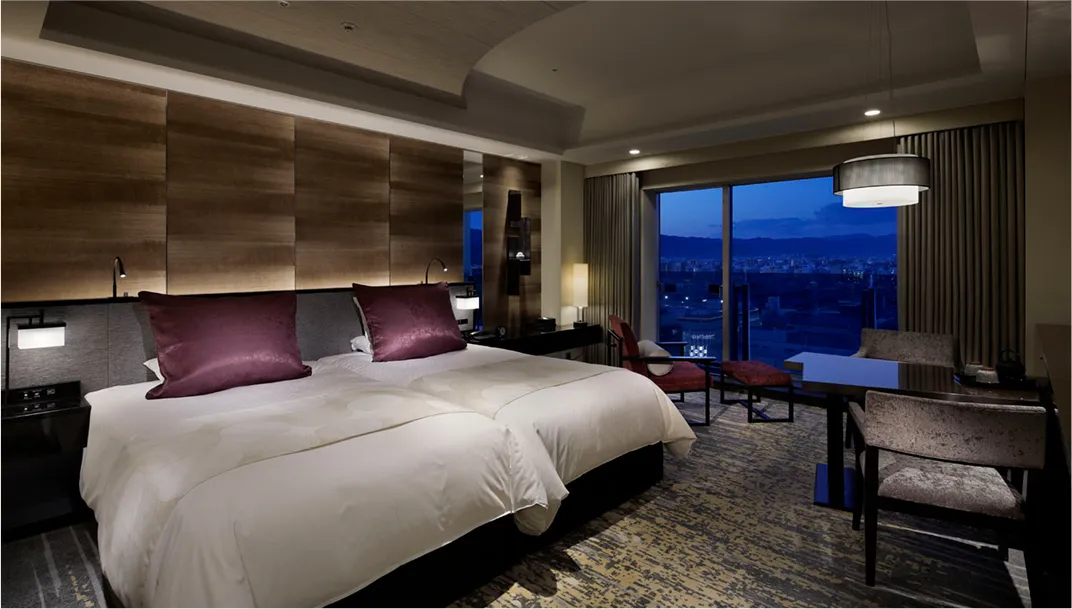
The hotel is directly connected to JR Kyoto Station, making it extremely accessible from the Shinkansen and other modes of transportation. The universal rooms have wide aisles to make wheelchair access easy, and the bathrooms are designed for ease of use. Another major benefit is that the hotel is located inside the station building, so you can enjoy dining and shopping without worrying about the weather.
Check out Hotel Granvia Kyoto in detail
The Prince Kyoto Takaragaike

This hotel is located in the quiet environment of Rakuhoku, surrounded by abundant nature. Located next to the international conference center, it has a calm atmosphere. The barrier-free rooms are spacious and offer views of the beautiful garden from the windows. Recommended for those who want to relax away from the hustle and bustle of the city. If you would like to know more about the barrier-free facilities in your room or to ensure your reservation, please consult with a barrier-free travel professional like Flat Travel, who will handle everything from checking the room that meets your needs to making the reservation.
Find out more about barrier-free information in Kyoto!
Would you like to know more about barrier-free access in Kyoto?
Flat Travel is a professional team of caregiver travel providers offering barrier-free travel throughout Japan.
We gather barrier-free information from all over Japan every day and propose it to our customers, which is why we know this.
Please check the following page for more information on this and other topics.
Frequently asked questions about using nursing care taxis in Kyoto
Here we have compiled a list of frequently asked questions and answers about using nursing care taxis in Kyoto. We hope this will help you resolve any doubts or concerns you may have when considering using one.
Can I use nursing care insurance?
Nursing care insurance coverage is generally limited to trips for activities necessary for daily life or social life, such as going to the hospital. Therefore, trips for sightseeing or personal travel are generally not covered by nursing care insurance and must be paid for in full by the individual. For details on whether your purpose of use is covered by insurance, please check with your care manager or the city/ward/town/village office.
Is it possible to make a reservation on the day?
If there are vehicles and drivers available, they may be able to accommodate last-minute reservations on the day. However, nursing care taxis are generally operated by reservation only, and since the number of vehicles with lifts in particular is limited, it is often difficult to arrange one on the day. To ensure availability, we recommend making a reservation well in advance, preferably at least the day before.
Can I also request a tour guide?
Some nursing care taxi companies offer a service where the driver also acts as a tour guide. Companies that are particularly focused on tourism may have drivers who are knowledgeable about Kyoto's history and attractions. If you would like this service, be sure to mention it when making your reservation and check whether it is possible and whether there will be an additional charge.
Can you provide transportation to areas other than Kyoto (Osaka, Nara, etc.)?
Many nursing care taxi companies offer long-distance transportation not only within Kyoto City, but also to neighboring prefectures such as Osaka, Nara, and Shiga. They may be able to meet a variety of needs, such as transportation to and from airports and stations in other cities, or day trips to tourist spots. However, fares are generally on a charter basis or quoted separately, so it is important to let them know your destination and confirm the price in advance.
For barrier-free travel in Kyoto, please contact Flat Travel.
Flat Travel is a travel agency specializing in barrier-free travel for wheelchair users, the elderly, people with disabilities, and their families. We can help with everything from arranging care taxis to suggesting and booking barrier-free hotels like those introduced in this article, and we'll listen to all your travel concerns and worries and propose the perfect plan. If you're planning a comfortable and safe trip to Kyoto, please feel free to contact Flat Travel.